

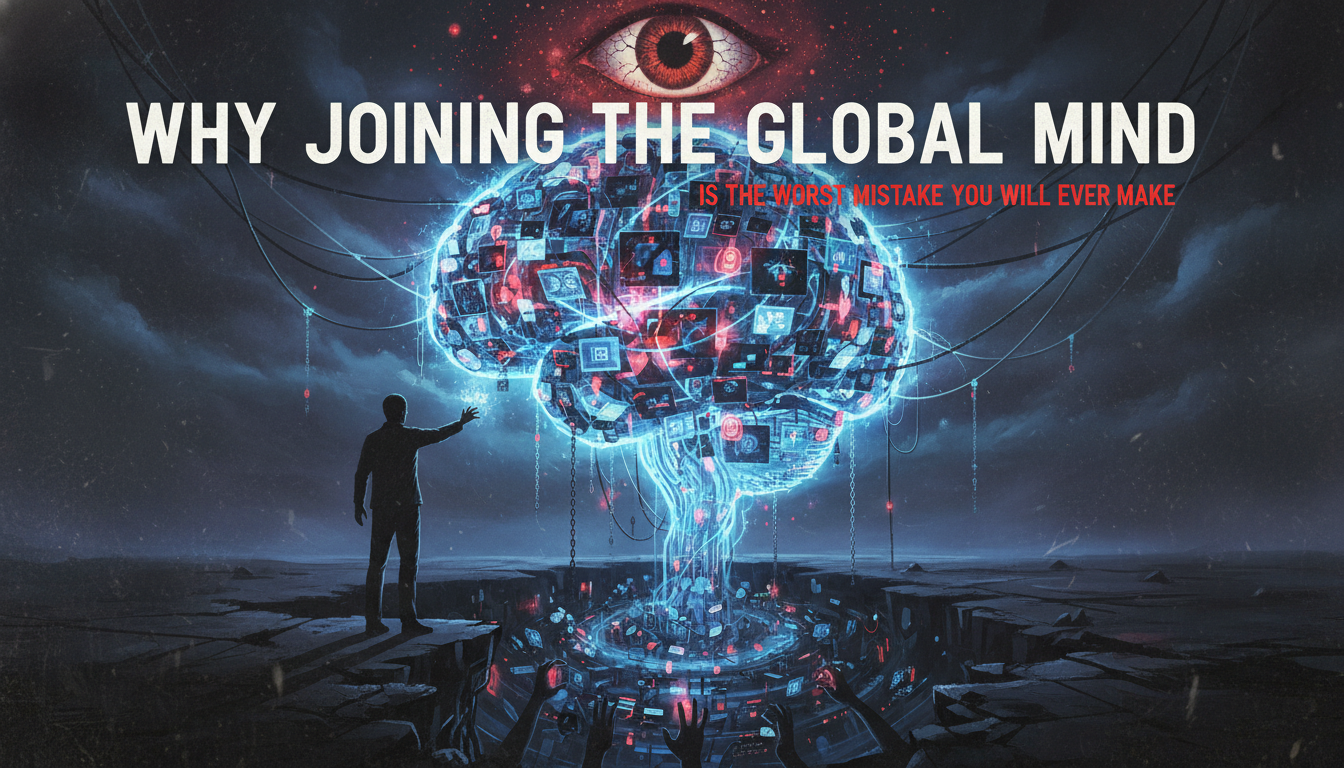
Ray was the kind of man who enjoyed a quiet bathroom break. That was before the Link. Now, even when he sat on the cold plastic seat at three in the morning, he could feel four billion people thinking about their grocery lists. It was like living inside a giant, wet radio that never turned off. Ray was a linguist: a word guy. His job was to watch the “Hum,” which was the fancy name for the psychic noise of the entire human race. It was supposed to be a beautiful song of peace. In reality, it sounded like a crowded mall where everyone was shouting about their ex-partners and their itchy feet.
He missed his wife, Maren. She had left him two years ago because he was “too quiet.” He thought that was funny now. He would give his left pinky finger for a second of real silence. Ray sat in his tiny, gray office and stared at the screens. His chest felt like it was being squeezed by a heavy, invisible hand. That was the stress. Or maybe it was just the feeling of a woman in Ohio who was currently having a panic attack about a burnt batch of cookies. You couldn’t tell where you ended and someone else began anymore.
Ray noticed the stutter on a Tuesday. It was a tiny rip in the noise. It didn’t sound like a thought. It sounded like a physical break: a jagged piece of glass in a bowl of pudding. He put on his headphones and leaned in. The sound was sharp. It was a single voice, tucked deep under the layers of people thinking about lunch and taxes.
“Help,” the voice said.
It wasn’t a loud shout. It was a dry, cracking sound. It reminded Ray of a bird trapped in a chimney. He looked at the data. The voice belonged to a girl named Gigi. According to the screen, Gigi was “Fully Integrated.” That was the corporate way of saying she was perfectly connected to the world. She should have been happy. She should have been feeling the “oneness” the ads promised.
Instead, she was screaming.
Ray tapped his pen against his teeth. He felt a cold shiver run down his spine. He searched for her location. She was in a pod city three states away. He tuned out the rest of the world. He muted the sounds of kids playing in France and the thoughts of a thousand monks. He focused only on the stutter.
“I am still here,” Gigi whispered. “Please. I am still me. It is so dark.”
Ray felt his eyes sting. He knew that darkness. It was the same feeling he had when Maren walked out the door with her blue suitcase. It was the feeling of being a ghost in your own life. The Global Mind was supposed to cure loneliness. But as Ray listened to Gigi, he realized the truth. The system wasn’t connecting people. It was burying them. It was a giant pile of human noise, and Gigi was at the bottom, suffocating under the weight of everyone else’s boring dreams.
He tried to type a message back into her brain. He used the admin keys.
“I hear you, Gigi,” Ray typed.
The stutter stopped for a second. The silence on her end was terrifying. It was the only silence Ray had heard in years. It felt like a hole in the universe.
“Ray?” the voice asked.
He froze. He hadn’t sent his name. He hadn’t sent anything but those four words. But in the Global Mind, secrets were like sand in a sieve. She knew him because he was part of the soup. She could feel his sadness. She could feel the way he still kept Maren’s old toothbrush in the cabinet because he couldn’t bear to throw it away.
“Get me out,” Gigi said. Her voice broke. “They are erasing my memories. I can’t remember my mom’s face. I only remember the face of a guy in Berlin I have never met. He likes onions. I hate onions. Ray, please. I am disappearing.”
Ray looked at the “Disconnect” button. It was a big, red circle on his screen. They told him in training that pressing it was a crime. It was called “Mental Murder.” If you unplugged someone, they might never find their way back to their own head. They would be a shell. But Gigi was already a shell. She was being filled up with the garbage of a billion strangers.
He thought about his own head. He thought about how he couldn’t remember his own childhood phone number anymore, but he knew exactly how a plumber in London felt about his gout. His own soul was being spread thin, like a tiny bit of butter on a giant loaf of bread.
“It’ll hurt,” Ray said out loud. His voice sounded strange in the quiet room.
“Do it,” Gigi whispered. “I want to be alone. I would rather be dead and alone than alive like this.”
Ray’s hand shook. He thought about the poets he used to read. They wrote about the beauty of the human spirit. They didn’t write about the horror of sharing a brain with people who leave comments on recipe blogs. He felt a sudden, hot burst of anger. It felt like a fever. He was tired of the noise. He was tired of the “Hum.”
He looked at the screen one last time. He saw the data for four billion people. It looked like a giant, pulsing worm. It was eating everything that made people special.
He didn’t just click the button for Gigi. He opened the main gate.
Ray grabbed his heavy coffee mug. It had a stain on the bottom and a chip on the rim. It was his favorite thing. He smashed it down onto the control panel. The plastic cracked. Sparks flew out, stinging his hands. He hit it again. And again. He screamed, but his voice was drowned out by a sudden, massive roar in his head.
It was the sound of four billion people suddenly being disconnected.
It wasn’t a clean break. It was a physical blow. Ray fell off his chair. His nose started to bleed. The blood was warm and metallic. He hit the floor and curled into a ball. The noise in his head reached a high, piercing whistle, and then, like a candle being blown out, it stopped.
Silence.
Ray stayed on the floor for a long time. He listened to the hum of the air conditioner. He listened to the sound of his own heart beating. Thump. Thump. Thump. It was the most beautiful thing he had ever heard. It was his. It didn’t belong to anyone else.
He sat up and wiped his nose with his sleeve. The screens were black. The office was dark. He felt a weird, empty space in his mind where the world used to be. It was lonely. It was cold. It was perfect.
He wondered where Gigi was. He wondered if she was sitting in her pod, blinking at the walls, remembering her mother’s face. He hoped she was. He hoped she was crying. Tears were better than the Hum.
Ray stood up and walked to the door. He didn’t have a job anymore. He didn’t have a connection. He walked out into the hallway. For the first time in three years, he couldn’t hear what the security guard was thinking about his lunch.
The guard was just a man. Ray was just a man.
He walked out of the building and into the night air. It was freezing. The wind bit at his face. He inhaled deeply, smelling the car exhaust and the rain. He was alone. He was tiny. He was nobody.
Ray smiled, and for the first time in his life, he didn’t have to share the feeling with anyone.