
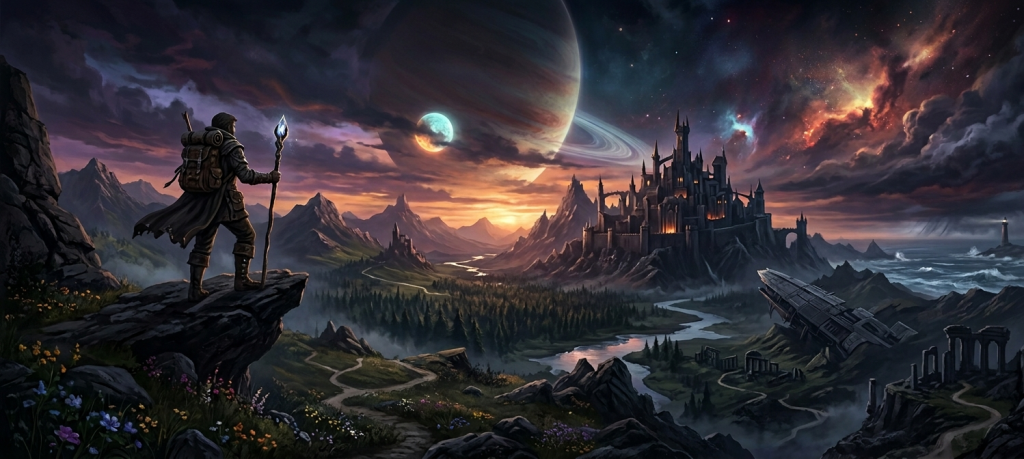
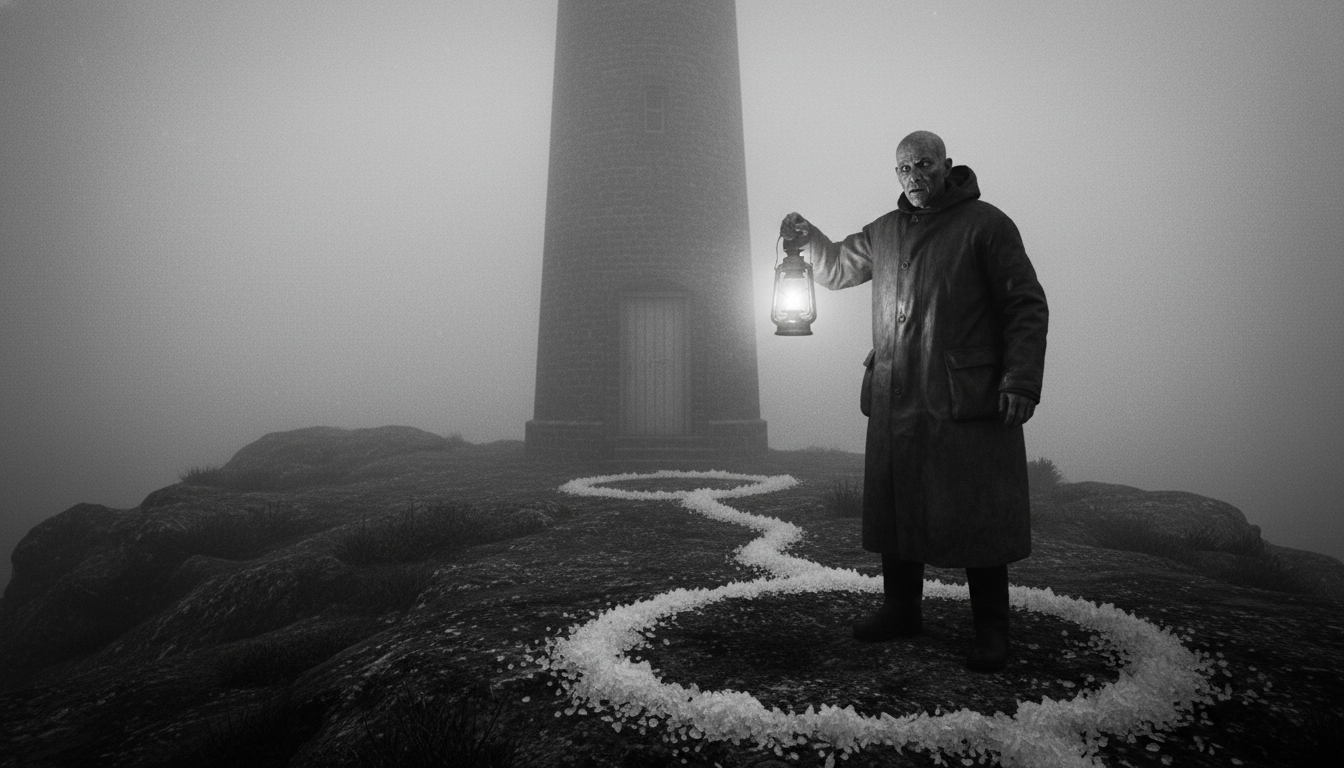
Marcus lived in a tall, white tower on an island that God forgot to name. It was a lonely place. It was a place where the wind sounded like a woman crying in the next room, but there was never any woman. There was only the cold. There was only the gray water of the North Atlantic. Marcus went there because he wanted to be alone with his shame. He wanted to hide from the world, and he wanted the world to hide from him.
He had a deep hole in his chest where his life used to be. Back in the town, he had a wife named Sia and a daughter named Goldie. They were his world. Goldie had hair the color of corn silk and a laugh that could make a stone smile. But Marcus was a man who liked his drink. He was a man who forgot to check the knots on the boat. One sunny afternoon, the boat tipped. The water was cold. The water was fast. Marcus grabbed for his daughter, but his hands were slow and clumsy from the bottle. He watched her yellow dress go under. He watched the light leave her eyes. He never found her. He only found the salt.
Now, Marcus worked the light. He kept the glass clean. He kept the gears greased. Every night, the big lamp would spin. It would cut through the fog like a hot knife. It was a simple life. It was a life of silence and soup. But the island was not as empty as it looked. The island had a way of reaching into a man. It reached into his head and pulled out the things he tried to bury.
It started on a Tuesday. The fog was thick. It was so thick that Marcus could not see his own feet. He sat in the lantern room, watching the beam swing around. The light hit the water, and for a second, the waves didn’t look like waves. They looked like a kitchen floor. They looked like the linoleum floor where Goldie used to play with her wooden blocks. Marcus rubbed his eyes. He felt a sharp kick in his heart. It was a sweet memory, and it hurt like a toothache. He could almost smell the cinnamon toast Sia used to make on Sunday mornings.
The light swung around again. This time, the beam hit a patch of dark water. In the middle of the ocean, Marcus saw a table. He saw a chair. He saw his own house, sitting there on top of the waves as if it belonged there. He saw the dust on the redundant second chair. He saw the way the sunlight used to hit the curtains. It was so real he wanted to scream. He wanted to jump out of the window and run across the water to sit in that chair one more time.
But then, the memory changed.
The light hit the water again, and the kitchen was gone. Now, it was the boat. It was the day the world ended. He saw the yellow dress. He saw Goldie’s small, white hands reaching up for him. The beam of light didn’t just show the memory. It projected it. It cast the image onto the fog like a movie. The water began to churn. It began to bubble.
Something started to crawl out of the waves.
Marcus stood at the glass, his breath fogging the pane. His heart was a panicked bird in a cage. He watched as a shape pulled itself onto the black rocks of the shore. It was small. It moved slow. It looked like a person, but it was white as a bone. It was covered in a thick crust of salt. The salt looked like armor. It looked like scales. As the thing moved, the salt crinkled and cracked. It sounded like someone stepping on dry leaves.
“Goldie?” Marcus whispered. His voice was a thin, broken thing.
The salt-thing looked up. It had no eyes. It only had two dark holes where the salt had not grown. It started to climb. It used its fingers to find cracks in the stone. Its movements were jerky. It moved like a puppet with tangled strings. Marcus ran down the spiral stairs. His boots clattered on the iron. He was terrified, but he was also hungry. He was hungry for his little girl. He was hungry for the smell of her hair and the weight of her in his arms.
He reached the heavy wooden door at the bottom of the tower. He put his hand on the iron bolt. He could hear it now. He could hear the scratching. *Scratch. Scratch. Scratch.* It was the sound of salt against wood. It was the sound of a daughter coming home to a father who had let her go.
“Marcus,” a voice whispered.
It wasn’t a human voice. It sounded like the tide going out over a bed of shells. It was dry and raspy. It was a voice made of brine and grief.
“Marcus, let me in. I’m cold. I’m so very cold.”
He knew that voice. It was the voice that haunted his sleep. It was the voice that told him he was a failure every time he closed his eyes. He felt a sudden coldness in his chest. It was a cold that no fire could warm. He wanted to open the door. He wanted to wrap his arms around that salt-covered thing and tell it he was sorry. He wanted to say he should have been the one to go under.
But he looked through the small peephole in the door.
The thing outside was not his daughter. It was a memory made of hate. The salt was thick on its face, forming a jagged, frozen mask. It didn’t have a mouth. It had a tear in the salt that leaked black, oily water. Behind it, more shapes were coming out of the sea. There was a man with a broken neck. There was a woman with seaweed for hair. They were the ones the light had brought back. They were the ones Marcus had watched drown from his high tower, the ships he couldn’t save, the lives he had ignored because he was too busy drowning in his own bottle.
They were all coming for him. They were encrusted in the salt of their own deaths.
Marcus backed away from the door. He tripped and fell. He felt small. He felt like a child lost in the woods. The door began to groan. The wood began to splinter. The salt-things were pushing. They were white, silent, and heavy. They smelled like rotting fish and old, wet clothes.
“We remember, Marcus,” the voices hissed together. It sounded like a thousand waves hitting the shore at once. “We remember the way you looked away. We remember the way you let us sink.”
Marcus scrambled back up the stairs. He ran until his lungs burned. He ran until he was back in the lantern room. He looked out at the sea. The light was still spinning. It was still shining. And everywhere the light touched, more memories were crawling out of the dark. He saw his old house again. He saw Sia crying at the funeral. He saw the bottle of whiskey sitting on his nightstand.
The light was a curse. It didn’t save ships. It called the dead. It turned the past into a monster that could touch you.
He heard the door at the bottom of the tower break. He heard the heavy *thump-thump-thump* of salt-covered feet on the stairs. They were coming for him. They were coming to take him back to the cold water. They were coming to turn him into salt.
Marcus stood by the great glass lens. He looked at the beautiful, spinning light. It was the only thing he had left. It was his duty. But it was also his judge. He felt a deep, soulful ache. He missed his life. He missed the sun. He missed the feeling of a warm hand in his.
The first salt-thing reached the top of the stairs. It was the little one. It was the one in the yellow dress, now stiff and white with brine. She stood in the doorway. She didn’t have a face, but Marcus knew she was looking at him. She held out a hand. Her fingers were sharp crystals of salt.
“Daddy,” she rasped.
Marcus didn’t run this time. He didn’t hide. He felt the stinging in his eyes. He felt the weight of every drink he ever took and every knot he ever missed. He realized that you can’t run from the sea. The sea always gets its due.
He stepped toward her. He felt the sudden coldness of the room. He felt the salt in the air, thick and biting. He reached out his own hand.
“I’m sorry, Goldie,” he whispered. “I’m so sorry.”
As his skin touched her frozen, salty hand, he didn’t feel pain. He felt a memory. He felt the smell of corn silk. He felt the sound of a tricycle on a sidewalk. He felt a love so big it made his ribs ache.
The light kept spinning. The beam swept across the room, over and over. But Marcus was no longer standing by the glass. There was only a pile of salt on the floor, and the sound of the wind, and the never-ending hunger of the sea. The tower was quiet. The island remained unnamed. And the light kept on remembering, shining its truth onto the dark and lonely water.