

Maury had hands that looked like topographical maps of a desert. They were dry, cracked, and stained with the kind of black grease that never truly washes off. He spent his days with a grease gun and a rag, making sure the giant brass gears of the lighthouse still turned. The government had cut the power fifty years ago, but Maury didn’t need their electricity. He had a backup generator he’d rebuilt three times using parts from old tractor engines. He lived for the sound of things working. When a piston fired or a gear meshed, Maury felt a small spark in his chest. It was the only thing that kept the cold from the Atlantic from freezing his blood solid.
The light was his only friend. He was eighty two years old, and his daughter, Cassidy, hadn’t visited the rock in a decade. He didn’t blame her. There was nothing here but the smell of salt and the sound of the fog. Maury had perfect pitch. He could hear a bolt loosening in the wind turbine from three rooms away because the hum would drop from a G-sharp to a G-flat. He knew the lighthouse like a doctor knows a heart. He knew the rhythm of the waves. Most importantly, he knew the sound of his foghorn. It was a deep, mournful D-natural that shook the floorboards every thirty seconds when the mist got thick.
The storm came on a Tuesday. It was the kind of weather that felt heavy, like the air was turning into liquid lead. Maury sat in his chair, listening to the generator hum. Then, he heard it. His horn blasted: a long, vibrating note. But three seconds later, another sound came back from the white wall of the fog. It wasn’t an echo. The pitch was wrong. It was a F-sharp.
Maury stood up, his knees popping like dry twigs. He checked the pressure gauges on the air tanks. They were steady. He waited. His horn blew again. Three seconds later, the F-sharp returned. Then a G. Then another F-sharp. Maury grabbed a pencil. He didn’t see music: he saw mechanical timing. He wrote down the intervals. Short. Short. Long. Pause. Short.
The pattern was a rhythmic code. It wasn’t Morse. It was the specific firing order of a six cylinder marine engine. He recognized it because he had designed that specific sequence for a shipping company back in the sixties. It was a signature. It was the sound of a fuel pump struggling to prime. But that ship, the one he had built the engine for, had gone down in 1974. It was the same ship that took his wife to the bottom of the sea.
His heart hammered against his ribs like a loose rod in a casing. He ran to the lantern room, his lungs burning. He peered into the gray nothing. There was no ship on the radar. The radar screen was just a green circle of static. But the sound was getting louder. The F-sharp was screaming now. It was vibrating through the glass of the lighthouse. It was a plea. The engine was failing. He could hear the valves floating, the timing chain slapping against the block.
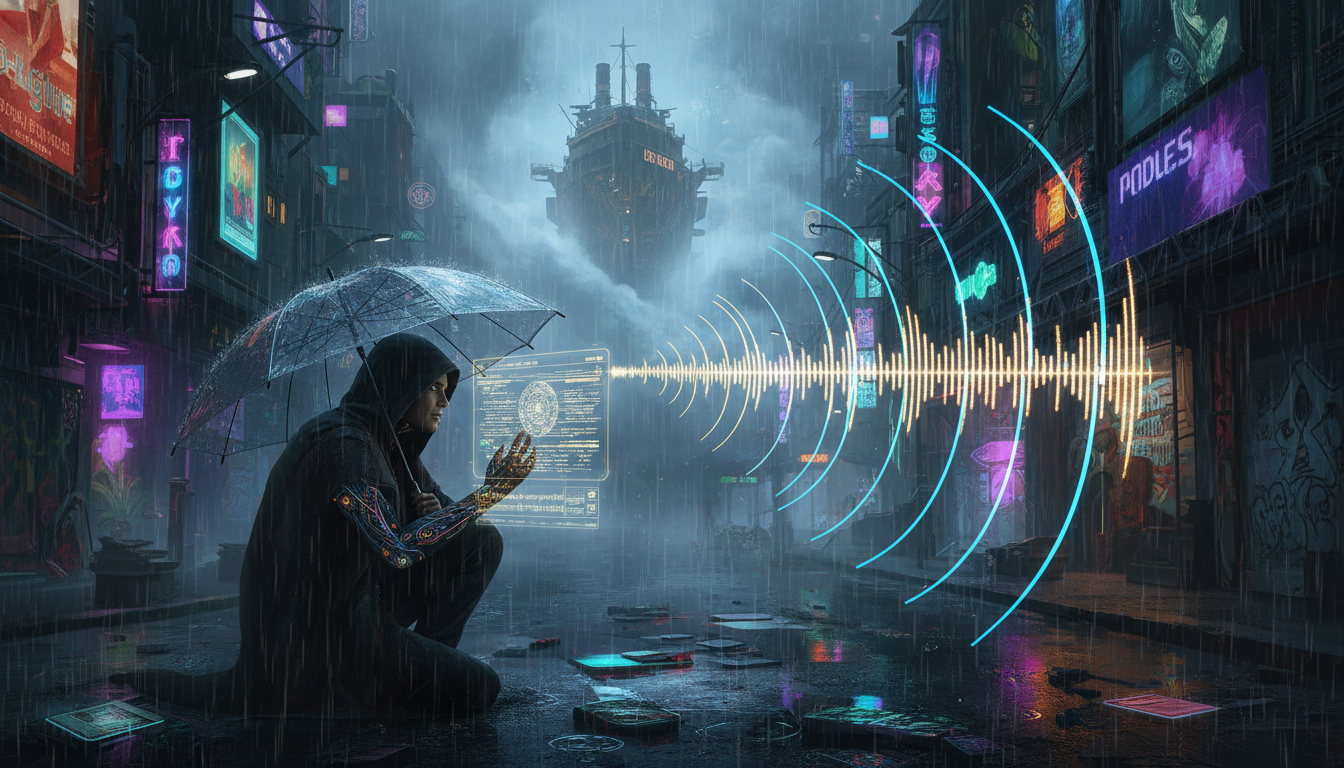
Maury didn’t panic. He was a mechanic. He went to the control board of the foghorn. If he could change the vibration of his own horn, he could talk back. He took a heavy brass wrench and began to loosen the tension bolts on the horn’s diaphragm. He was changing the pitch. He moved it from a D to a C-sharp. He timed his blasts to match the gaps in the phantom engine’s firing order. He was “tuning” the fog.
He worked until his fingers bled. He was a man possessed, his mind racing through calculations of sound waves and pressure. He felt a strange, wild joy. For fifty years, he had been a ghost in a dead tower. Now, he was fixing something. He was reaching through the dark to a machine that shouldn’t exist. He hammered on the brass until the notes aligned. A perfect chord struck between his tower and the sea.
The moment the sounds synced, the fog seemed to pull back for a split second. Maury saw it: a hull made of rust and moonlight, sitting high in the water. It wasn’t a ghost. It was a miracle of engineering and stubbornness. The ship was the *Cassidy*, named after the daughter he’d neglected for the sake of his machines. He saw a figure on the deck, a woman with a lantern. She looked just like his wife did the day the world ended. She wasn’t screaming. She was smiling.
The “Aha!” moment hit him with the force of a wrecking ball. The secret wasn’t that the ship was back. The secret was that the lighthouse hadn’t been guarding the sea. It had been holding the ship in a loop of broken sound. By fixing the melody, he was letting them go. He was finishing the repair.
Maury gave one final, triumphant blast. The sound was pure. It was the sound of a perfectly timed engine, smooth and powerful. The phantom ship surged forward, catching a current that didn’t exist on any map. It faded into the gray, the F-sharp softening into a hum, then a whisper, then silence.
The generator in the basement sputtered and died. The lighthouse went dark. Maury sat on the cold floor, his tools scattered around him. He was alone in the pitch black. The silence was absolute. He had won. He had saved them. He had finally fixed the one thing that mattered.
He put his head back against the cold stone wall. The joy stayed in his chest, warm as a fresh weld, but his eyes were wet. He had no more machines to fix. He had no more sounds to follow. The victory was complete, and it left him with nothing but the smell of old grease and the realization that he was a very old man on a very small rock. He closed his eyes and listened to his own heart. It was a slow, tired thumping. It was out of tune. And for the first time in his life, Maury didn’t try to fix it. He just let the rhythm fade away.