
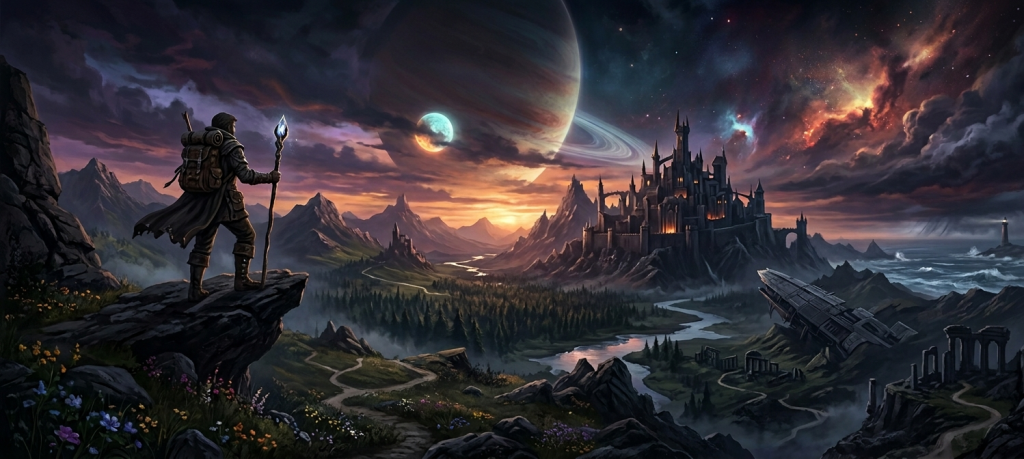
So, let me tell you about Ike. This guy was a total wreck when I first met him. He was a map maker who couldn’t find his way out of a paper bag. Not because he was dumb: he was actually a genius: but because he’d messed up a big map for the King. A whole army got lost in a swamp because Ike forgot to draw a mountain. He was disgraced, broke, and lived in a shack that smelled like old ink and regret.
But Ike had one thing left. He had a theory about the Deep Fold.
The world outside was falling apart. The rain had stopped falling years ago. The dirt was turning into gray powder, and the trees looked like bony fingers reaching for a drink. Everyone knew the climate was cooked. Ike believed there was a relic hidden miles underground that could fix it. He called it the Core of Calm.
He couldn’t go alone, though. He needed someone who could see in the dark and move like a cat. That’s where Maya came in. Maya was a scavenger who lived in the ruins of the old city. She didn’t talk. Not a word. She’d lost her voice during the Great Dry, but she could hear a spider walking on a web from thirty feet away.
Ike and Maya stood at the edge of the Maw. It was a hole in the ground that looked like it wanted to swallow the sky. Ike was shaking so hard his spectacles were rattling on his nose. He felt a cold knot of fear in his gut. What if he got them lost? What if his bad luck rubbed off on Maya?
Maya just looked at him and gave a sharp nod. She strapped her pack tight and hopped into the dark. Ike gulped, clutched his blank parchment, and followed her down the rope.
They climbed for hours. The air got thick and sweet, like jasmine and old books. When they finally hit the bottom, Ike lit a torch. The walls weren’t made of rock. They were made of something that looked like polished silver, and they were humming.
“Okay,” Ike whispered, his voice cracking. “My notes say the maze changes. It reacts to what we think about.”
Maya tilted her head. She reached out and touched the silver wall. As soon as her fingers grazed the surface, the wall began to melt and shift. It didn’t turn into a puddle: it turned into a scene.
Suddenly, they weren’t in a dark hole anymore. The wall became a field of tall, golden grass. Ike could swear he felt a warm breeze on his face. He smelled the scent of wild strawberries. Maya’s eyes went wide. She walked forward, and the grass parted for her. It was a memory of hers, a time before the world turned to dust.
They walked through the field, even though they were still deep underground. The ground felt soft under their boots. Ike felt a strange lightness in his chest. For the first time in years, the weight of his failure didn’t feel so heavy.
Then, the field ended at a solid wall of ice.
“Oh, boy,” Ike said. “That’s mine. I remember the Great Freeze of ’92.”
The ice was thick and blue. Ike started to panic. He remembered being cold and hungry. He remembered the feeling of being totally alone. As his fear grew, the ice wall started to grow spikes. The tunnel got narrower. The air turned freezing, and Ike’s breath came out in white puffs.
Maya grabbed his hand. Her palm was warm and rough from years of climbing. She looked him right in the eye and squeezed. She didn’t need words. She was telling him to focus on something else.
Ike shut his eyes. He thought about the day his father gave him his first compass. He remembered the feeling of the brass in his hand and the way the needle always knew where to go. He remembered the smell of the Sunday roast and the sound of his mother humming in the next room.
The ice didn’t just melt: it glowed. It turned into a hallway of warm, golden wood. The floor was covered in soft rugs. The walls were lined with shelves of maps that actually made sense. Ike laughed. It was a loud, belly-shaking sound that echoed through the maze.
They kept moving, and the maze kept playing along. They walked through a forest of giant mushrooms that sounded like wind chimes when they brushed against them. They crossed a bridge made of solid light that felt like walking on a cloud. Every time a wall blocked their path, they just shared a happy thought.
Ike realized something amazing. The maze wasn’t trying to trap them. It was trying to see if they were worth the prize. It was testing if they still had any light left inside them.
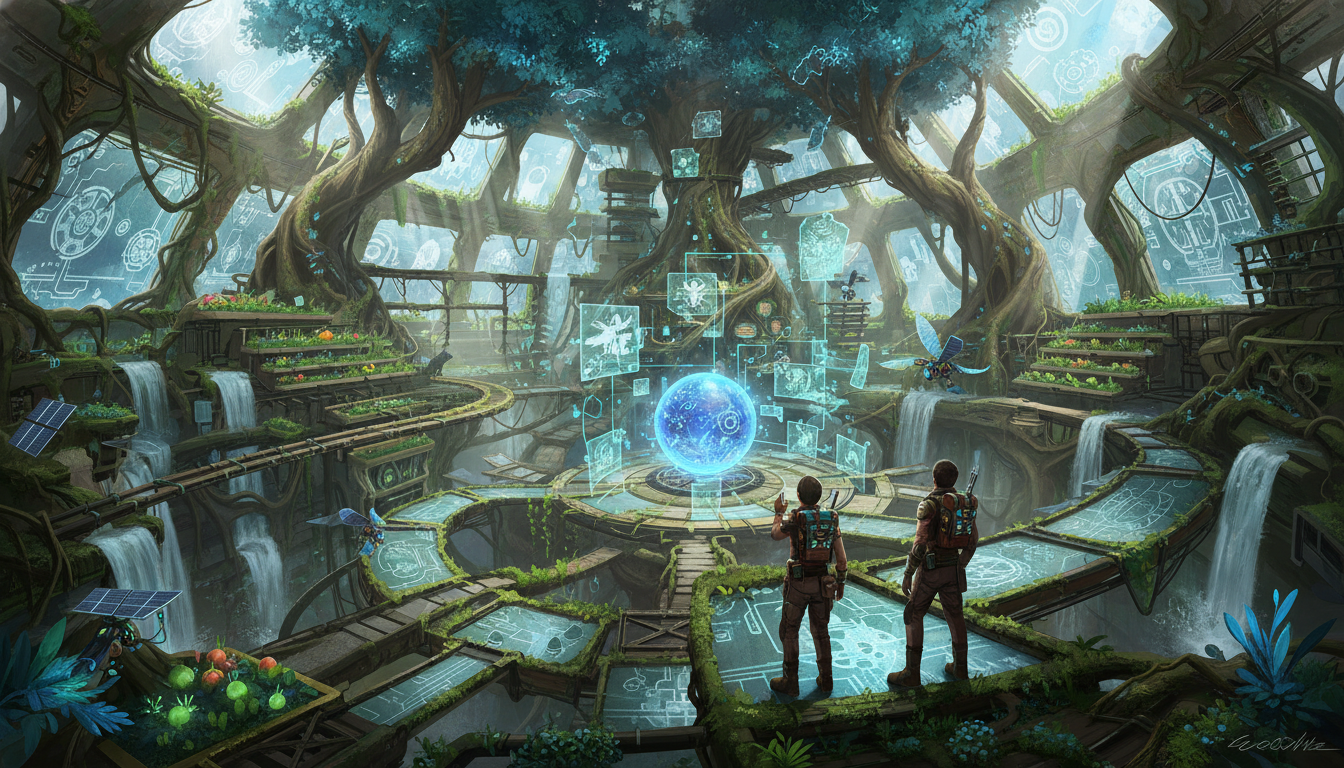
Finally, they reached the center. It was a massive dome of crystal. In the middle, floating on a pedestal of white stone, was the Core of Calm. It was a spinning glass sphere filled with what looked like a miniature thunderstorm, but the lightning was soft blue and the clouds were pearly white.
As they approached, the sphere began to pulse. It felt like a heartbeat.
Ike reached out, his hands trembling. He thought about the whole world getting a long, cool drink of water. He thought about Maya being able to sing again. He thought about people not being afraid of the sun anymore.
When he touched the glass, a wave of pure joy hit him. It wasn’t just a feeling: it was a physical force. It knocked him back, but Maya caught him. They both felt it: the stinging in their eyes, the sudden warmth in their limbs, the way their hearts seemed to sync up.
The sphere stopped spinning and settled into Ike’s hands. It was light as a feather and warm as a toasted marshmallow.
The walls of the dome began to dissolve. They weren’t falling; they were rising. The memory maze was pushing them back to the surface. They zoomed upward through layers of rock and dirt, surrounded by the scents of rain and fresh-cut grass.
They popped out of the Maw like corks from a bottle.
They landed on the dry, cracked earth. For a second, everything was silent. Then, Ike held the Core of Calm high above his head.
The sphere let out a soft, musical chime.
A single drop of water hit Ike on the nose. Then another hit Maya’s cheek. Within seconds, the sky turned a deep, bruised purple. A scent like wet pavement and life filled the air. Then, the sky just opened up.
It wasn’t a scary storm. It was a gentle, soaking rain.
Ike looked at Maya. She was standing with her arms out, her face turned up to the clouds. She was soaked to the bone and grinning so wide it looked like her face might break.
Then, she did something that made Ike’s heart nearly jump out of his ribs.
She opened her mouth and let out a sound. It wasn’t a word yet, just a soft, happy hum that matched the sound of the falling rain.
Ike sat down in the mud and started to laugh. He didn’t care about his old maps. He didn’t care about the King or the disgrace. He looked at his hands and realized they weren’t shaking anymore.
He took out his parchment. The rain hit the paper, but the ink didn’t smear. He started to draw. He didn’t draw the mountains or the swamps. He drew Maya standing in the rain. He drew the way the light hit the water.
“I know where we are,” Ike said, looking up at her.
Maya looked at him and tilted her head, curious.
“We’re home,” Ike said.
And for the first time in a very long time, the map in his head matched the world under his feet. He felt a deep, soulful glow. They had a long walk ahead of them, but the dirt was turning to mud, the seeds were waking up, and he had a friend who knew exactly which way to go.
Ike stood up, wiped his glasses, and offered Maya his arm. She took it, her grip firm and real. They walked off into the rain, two people who had gone looking for a relic and ended up finding themselves instead.
Pass me another drink, will you? That’s the kind of story that deserves a toast. To the maps that lead us to the good stuff.