

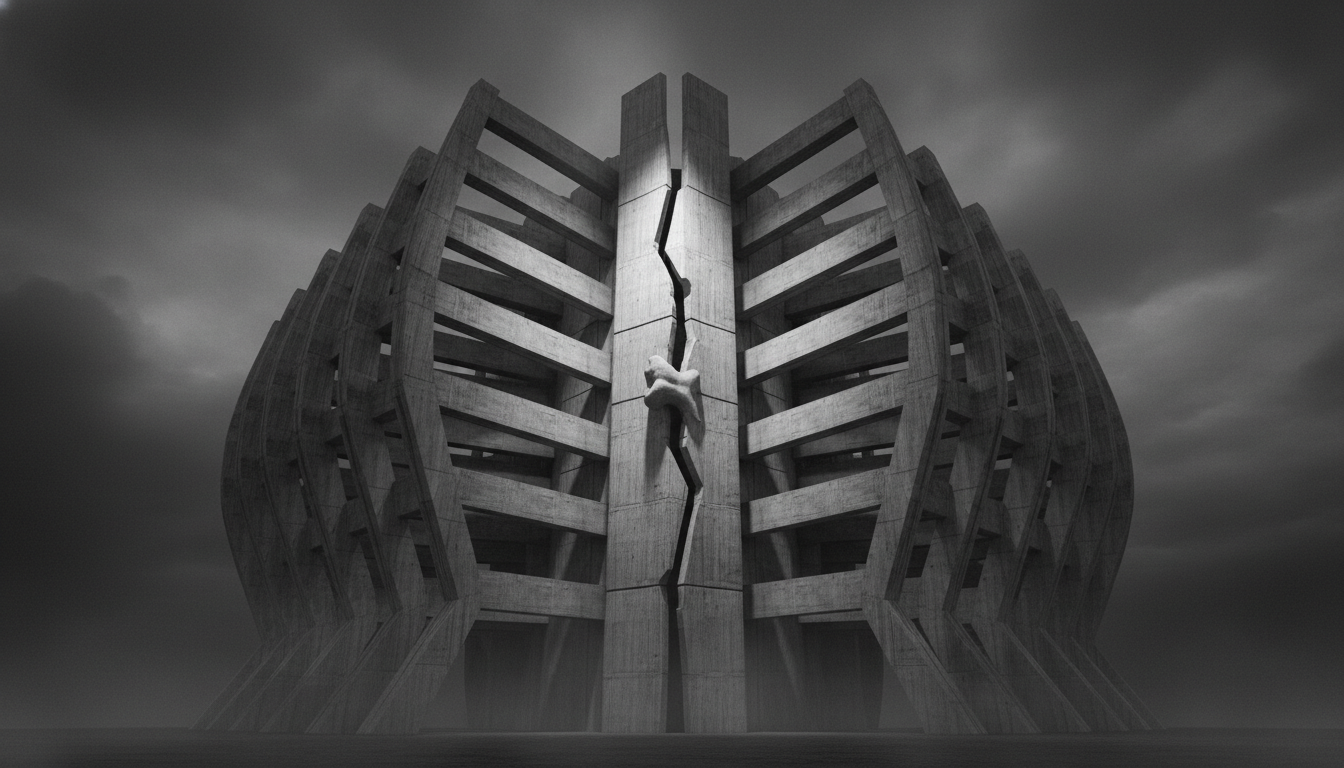
I am a lawyer. I spent ten years in big cities. I looked at papers and argued about money. I liked facts. Facts are cold. They do not have feelings. They do not change when you look away.
My father, Ray, did not like facts. He liked wood. He was the best carpenter in this part of the state. He could smell the difference between oak and maple from across a room. He used to say that wood remembers everything. He said trees watch us for a hundred years before we turn them into chairs.
I came back to our small town because Ray started losing his mind. It did not happen all at once. It was like a slow leak in a pipe. First, he forgot where he put his keys. Then, he forgot how to tie his boots. Finally, he forgot that I had moved away ten years ago. He thought I was still ten years old, waiting for him to finish a birdhouse.
I sat in the kitchen. I watched him in his workshop through the window. He was sanding a long piece of pine. He did it for four hours. His knuckles were raw and white. He did not stop to eat. He did not stop to drink. He just moved his hand back and forth. Back and forth.
The workshop was filled with fine gray dust. It covered everything like a layer of dead skin. It was on his eyelashes. It was in his lungs. I walked out there and touched his shoulder.
He did not jump. He just stopped sanding. He looked at me with eyes that were clear and very cold.
“The foundations are soft, Blair,” he said. His voice was like gravel rubbing together.
“The house is fine, Dad,” I said. “Come inside. I made eggs.”
“Not this house,” he whispered. He looked toward the town. “Their houses. The ones I built for the families. The families that started this place. I put things in the beams. They told me to. To make the houses strong, they said.”
I took the sandpaper from his hand. His skin was hot. “You built good houses, Ray. Everyone knows that.”
He leaned in close. He smelled like cedar and old sweat. “You don’t understand. A house needs a heart to stand up straight. That is what the old families told me. Gabe’s father. Maren’s grandfather. They brought me the things to put inside the wood. I carved out the holes. I tucked the things in. Then I sealed them with wax.”
I thought it was just the sickness in his brain. I thought he was talking about lucky charms or old coins. People do that in small towns. They put a penny under a floorboard for luck.
“What kind of things, Dad?” I asked. I spoke slowly, like I was talking to a witness in court.
Ray looked at the floor. “Small things. White things. Things that looked like whistles but didn’t make a sound. They were cold. Even in the summer, they stayed cold.”
I felt a small prickle of ice on the back of my neck. I ignored it. I am a lawyer. I believe in evidence.
That night, a storm hit. The wind hammered against the side of the house. It sounded like someone was trying to kick the door down. I stayed in the guest room. I couldn’t sleep. The house felt thin. It felt like the walls were made of paper.
I heard a sound from the workshop. It was a rhythmic thud. Thud. Scrape. Thud.
I got out of bed. I did not put on my shoes. I walked to the window. The light in the workshop was on. I could see Ray. He had a crowbar. He was ripping up the floorboards of his own shop.
I went out there. The rain soaked through my shirt in seconds. The air was freezing. When I pushed the shop door open, the smell hit me. It was not cedar. It was not pine. It was the smell of a cellar that had been closed for fifty years. It was the smell of wet earth and something sweet. Something rotten.
Ray was standing over a hole in the floor. He was shaking.
“I remembered where I put the last one,” he said. He pointed into the dark space under the wood. “I didn’t want to. They made me. They said it was the only way to keep the town quiet.”
I looked down. Ray’s flashlight was lying on the ground. Its beam hit something in the dirt.
It was a bone.
It was not a bone from a cow or a deer. It was small. It was curved. It was a human finger bone. It sat in a little box made of dark walnut. The wood was carved with tiny, beautiful flowers. My father’s work.
“Who is that, Dad?” I asked. My voice broke. I felt a sudden coldness in my chest. It felt like my heart had turned into a block of ice.
“The girl who worked at the diner,” Ray whispered. “The one they said ran away in 1974. She didn’t run. She’s in the North beam of the Miller house. And the boy from the farm? He’s in the foundation of the town hall.”
He looked at me. His face was a mask of pure terror. “I built the cages, Blair. I didn’t know they were for people until the screaming started. But I finished the work. I had to. If I didn’t, I would have been a beam, too.”
I heard a car door slam out front.
I froze. No one should be here. It was three in the morning.
I looked through the cracks in the workshop wall. A black truck was idling in the driveway. The headlights were off, but the moon showed me the shape of the driver. It was Gabe. He was the sheriff now. His family had lived here since the town was a single dirt road.
Gabe got out of the truck. He was holding a heavy flashlight. He didn’t look like the man who had brought us a pie yesterday. He looked like a hunter. He walked toward the workshop with slow, heavy steps.
“Ray?” Gabe called out. His voice was smooth. Too smooth. “You’re making a lot of noise out here, old man. You’re going to wake the neighbors.”
Ray grabbed my arm. His grip was like a vice. His fingernails dug into my skin. “Don’t let him see the box,” he hissed. “If he knows I remembered, the house will need a new heart.”
I looked at the bone in the beautiful walnut box. I looked at the hole in the floor. My father had spent his whole life building the town’s secrets into its very walls. Every house was a tomb. Every porch was a lid.
The door to the workshop creaked.
“Blair?” Gabe said. He was standing in the doorway. The light from his flashlight hit my eyes. I couldn’t see his face. I could only see the bright, blinding circle of white. “What are you doing out here in the dark?”
“My father is confused,” I said. I tried to make my voice sound like my lawyer voice. I tried to sound bored. I stepped in front of the hole in the floor. “He’s having a bad night, Gabe. I’m just taking him back to bed.”
Gabe didn’t move. He tilted his head. The light shifted. It caught the edge of the crowbar. It caught the pile of dirt.
“This town has a history,” Gabe said. He walked into the room. The wood floor groaned under his boots. “We like our history to stay where we put it. Your dad was a great builder. He knew how to make things stay put.”
He stopped three feet away from me. I could see his eyes now. They were flat. They looked like the eyes of a fish. There was no kindness in them. There was only a quiet, heavy weight.
“Is he talking again, Blair?” Gabe asked. He looked at Ray.
Ray was staring at the wall. He was gone again. The spark had left his eyes. He started humming a low, tuneless song. He picked up a piece of sandpaper and began to rub the air.
“He doesn’t know where he is, Gabe,” I said. My pulse was thudding in my ears. It sounded like a drum. “He doesn’t know anything.”
Gabe looked at the hole in the floor. He stepped closer. He looked down at the walnut box.
I watched his hand move to the belt where his gun sat. It was a small movement. He didn’t even seem to think about it. It was a habit.
“It’s a shame,” Gabe said. “Memory is a heavy thing. It wears a man down. It wears a town down, too.”
He looked at me. He smiled. It was the scariest thing I had ever seen. It was a smile that didn’t reach his eyes. It was just a shape his mouth made.
“You should go back to the city, Blair,” Gabe said. “The air here is too thick for you. It’s full of dust. You’ll choke on it if you stay.”
He reached down and picked up the walnut box. He tucked it into his pocket.
“I’ll take this,” he said. “It looks like something my grandfather lost. I’ll make sure it gets back where it belongs.”
Gabe turned and walked out into the rain. He didn’t look back. He got into his truck and drove away.
I stood in the workshop for a long time. The rain tapped on the roof. Ray kept sanding the air.
I looked at the walls of the workshop. I looked at the house. I thought about the beams and the foundations. I thought about the “whistles” that didn’t make a sound.
I am a lawyer. I like facts.
The fact is, my father built this town.
The fact is, the town is still hungry.
I went back inside the house. I locked the door. Then I moved the heavy oak dresser in front of it. I went to the kitchen and grabbed the biggest knife I could find.
I sat on the floor in the hallway. I waited for the sun to come up. But as I sat there, I heard a sound. It wasn’t the wind. It wasn’t the rain.
It was a faint, muffled scratching. It was coming from inside the wall.
Something was trying to get out. Or something was trying to get in.
I looked at the wood. The grain of the oak looked like a thousand tiny eyes, all watching me. My father was right. The wood remembers. And it never, ever lets go.