

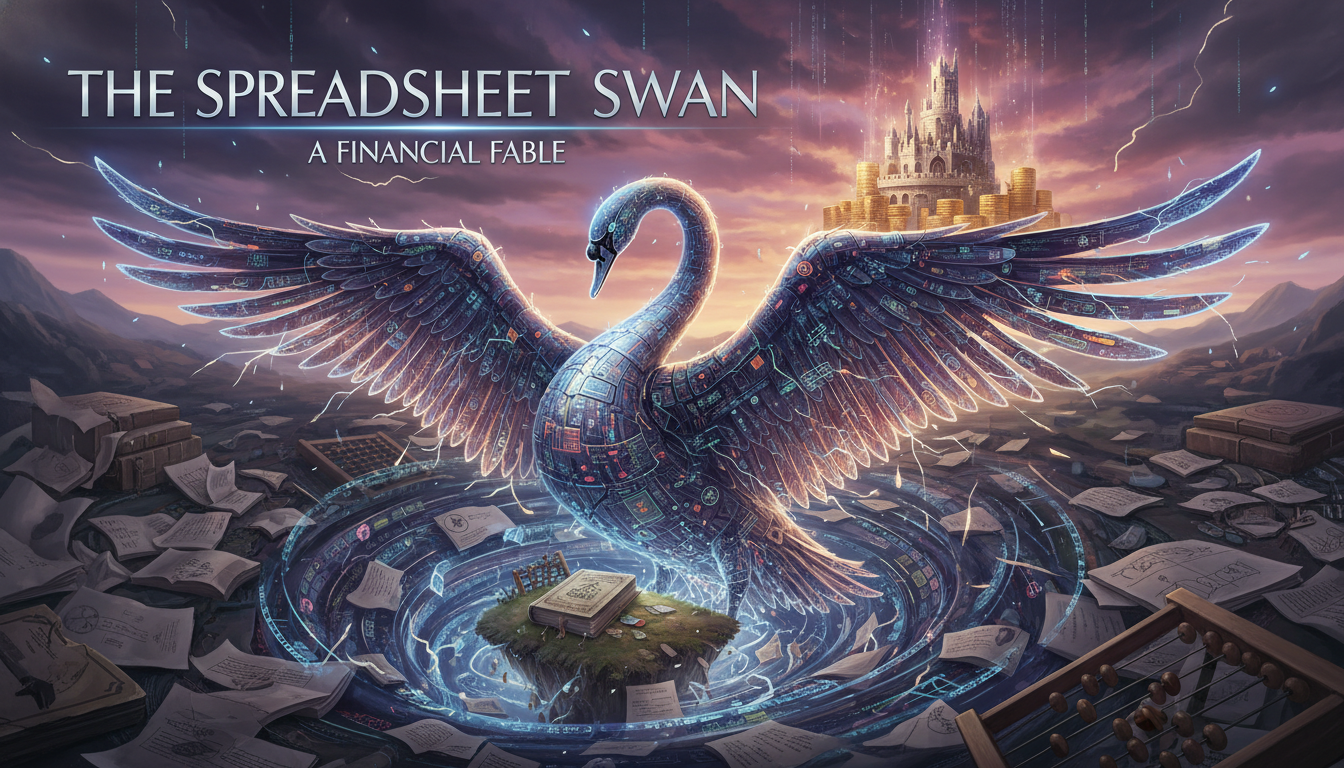
The stapler was a Swingline 747, finished in a matte grey that Arthur Pringle found deeply comforting. It required exactly four point two pounds of pressure to engage. *Clack-shhh.* *Clack-shhh.*
Arthur adjusted his spectacles. His desk was an island of crystalline order in the chaotic sea of the “Refunds and Adjustments” department. Every paperclip was sorted by size and tension. His lunch—a single pumpernickel bagel and a lukewarm thermos of chamomile—sat precisely three inches from the edge of his mahogany-veneer desk.
Arthur was a man who lived in the margins. He was the human equivalent of a footnote. If you passed him in the hall, your brain would likely categorize him as “structural beige” and immediately delete the memory.
But at 6:02 PM, when the fluorescent lights hummed in an empty office, Arthur Pringle became someone else.
He would lock the door of the handicap-accessible stall in the executive washroom—the one with the most floor space. He would remove his sensible loafers. And then, he would dance.
It wasn’t jazz. It wasn’t ballroom. It was *Interpretive Movement*.
On this particular Tuesday, Arthur was performing a piece he called *The Audit of the Soul*. He arched his back, his fingers fluttering like a line item being corrected. He leapt, a silent, mid-air calculation of a complex tax credit. He landed with the grace of a falling leaf, his face contorted in an expression of agonizing fiscal transparency.
He didn’t see the janitor watching through the gap in the stall door. He didn’t hear the janitor whisper, “Dios mío, the fluidity… it is like the wind through the agave.”
Arthur simply breathed, a bead of sweat tracing a lonely path down his temple. He felt alive. He felt seen by the universe, even if the universe was currently just a tiled wall and a sanitary napkin dispenser.
***
The “Grandmother Problem” arrived in a beige envelope with a “Final Notice” stamp that looked like a bloodstain.
Arthur sat in the kitchen of *The Clowder Cottage*, a Victorian house that smelled perpetually of wet fur and expensive tuna. His grandmother, Martha, a woman who looked like a dandelion gone to seed, was currently bottle-feeding a kitten named Barnaby who had only three legs and an overbite.
“They’re turning it into a parking lot, Arthur,” she said, her voice a fragile reed. “For the new stadium. The kittens… where will they go? Barnaby can’t live in a parking lot. He has no traction.”
Arthur looked at the figures. The back-taxes, the land-zoning fees, the “Inconvenience Premium” demanded by the developer, a man named Sterling Vane whose teeth were too white to be trusted.
The total was $47,500.
Arthur’s heart did a strange, syncopated rhythm. His savings account held exactly $1,204 and a commemorative coin from a car wash.
“I’ll find a way, Nana,” he whispered. He felt a sudden, visceral coldness in his gut. It was the feeling of a balance sheet that refused to balance. It was the “Stillness” that preceded a catastrophe.
***
The auditing assignment took him to Laredo. It was a “routine check” on a sports promotion company called *Lucha-Mania Enterprises*.
The gym was a cathedral of sweat and stale corn chips. The air was thick enough to chew. Arthur, clutching his briefcase like a shield, stepped over a discarded kneepad.
“Mr. Rodriguez?” Arthur called out, his voice cracking. “I’m from the IRS. I’m here about your Form 1099 discrepancies.”
A man the size of a refrigerator, wearing a vest made entirely of sequins, turned around. He was sobbing. “He’s gone! *El Cisne de Muerte* has defected to the Japanese circuit! The main event is in twenty minutes! The television cameras are here! The gambling syndicates will have my head!”
“I… I just need to see your receipts for ‘Incidental Spandex,’” Arthur said, stepping forward.
The big man, Rodriguez, stopped crying. He stared at Arthur. He stared at Arthur’s bald head, his pale, expressive face, and the way Arthur accidentally dodged a falling weight with a subconscious, fluid pirouette.
“The way you moved,” Rodriguez whispered. “The swan-like neck. The look of existential dread in your eyes.”
“I have a very stressful job,” Arthur offered.
“You are him,” Rodriguez gasped, his eyes widening. “The mask… it covers the face, but it cannot hide the soul. You are the secret understudy. You are the new *Cisne de Muerte*!”
“No, I’m a Level 4 Auditor. I specialize in—”
“Fifty thousand dollars,” Rodriguez said, grabbing Arthur’s shoulders. “The winner of the ‘Cruiserweight Carnage’ tournament gets fifty thousand dollars. Cash. Tax-free.”
Arthur froze. $50,000.
He thought of Barnaby the kitten. He thought of the parking lot. He thought of the way his life felt like a stapler—functional, grey, and stuck in one place.
“Does the mask have good ventilation?” Arthur asked.
***
The locker room was a sensory assault. The smell of Ben-Gay was so potent Arthur felt his sinuses might actually dissolve.
They shoved him into a suit of shimmering silver spandex. It was dangerously tight. Arthur felt like a link of premium sausage. Then came the mask—a magnificent, feathered monstrosity with silver sequins around the eyes.
“Listen to me, *Cisne*,” Rodriguez hissed, shoving a mouthful of smelling salts under Arthur’s nose. “You’re up against ‘The Iron Anvil.’ He’s three hundred pounds of pure, unrefined hate. He doesn’t like ‘finesse.’ He likes ‘structural collapse.’ Do not let him touch you.”
Arthur’s mouth went dry. His heart wasn’t thudding; it was performing a frantic tap-dance against his ribs. The “Stillness” returned, but this time it was heavy, like a lead blanket.
“I don’t know how to wrestle,” Arthur whispered to the mirror.
The mask stared back. The silver feathers caught the light.
“I don’t wrestle,” Arthur realized, his eyes narrowing behind the sequins. “I interpret.”
***
The arena was a roar of sound. Thousands of people screaming for blood. The lights were blinding, hot as a desert sun.
“AND NOW,” the announcer bellowed, “FROM THE DEPTHS OF THE BLACK LAGOON OF SORROW… THE REBORN PRINCE OF PANACHE… EL CISNE DE MUERTE!”
Arthur stepped through the curtain.
The crowd went silent.
Arthur didn’t walk. He *flowed*. He performed the *Entrance of the Reluctant Taxpayer*. He moved with a jerky, rhythmic hesitation, his limbs trailing behind him as if caught in a bureaucratic headwind. He reached the ring and, instead of climbing through the ropes, he performed a slow-motion “Dying Swan” roll under the bottom strand, ending in a pose of profound melancholy.
The crowd didn’t boo. They gasped.
“He’s… he’s so graceful,” a woman in the front row sobbed.
Then, The Iron Anvil entered. He didn’t flow. He vibrated. He was a mountain of hair and anger. He stepped into the ring and the floorboards groaned in protest.
“I’m gonna break your beak, bird-boy,” Anvil growled.
The bell rang. *Ding.*
Anvil charged.
Arthur didn’t flinch. He channeled the *Dance of the Inland Revenue Service*. As the Anvil lunged, Arthur performed a “Deductible Dodge.” He pirouetted on one toe, his body tilting at a forty-five-degree angle that defied gravity. The Anvil sailed past him, hitting the turnbuckle with a sound like a car crash.
Arthur landed, his arms outstretched, his fingers trembling in a visual metaphor for a declining interest rate.
The crowd erupted. “CISNE! CISNE! CISNE!”
The Anvil turned, purple with rage. He swung a fist that could have decapitated a horse. Arthur performed the *Leap of the Unclaimed Dependent*. He soared over the Anvil’s head, his legs trailing in a perfect arc, his face set in an expression of tragic nobility.
As he landed, Arthur realized he was having the time of his life.
He began to improvise. This wasn’t just a fight; it was a narrative. He was the Auditor. The Anvil was the Debt.
He spun. He twirled. He used the Anvil’s own momentum against him, guiding the giant man into the ropes with a series of gentle, rhythmic shoves that looked like a contemporary ballet piece about the struggle of the working class.
The Anvil was confused. He tried to grab Arthur’s throat, but Arthur transformed the movement into a *Pas de Deux*. He took the Anvil’s hand and led him in a frantic, three-second waltz across the canvas before tripping him with a “Subsidized Sweep.”
The Anvil hit the mat. *WHAM.*
The crowd was standing on their chairs. They had never seen anything like it. It wasn’t wrestling. It was art. It was beautiful. It was hilarious.
But then, the Anvil stopped being confused. He got angry.
He grabbed Arthur’s leg. The “Stillness” shattered.
Arthur felt a surge of genuine terror. The Anvil lifted him like a sack of flour. “No more dancing,” the giant hissed.
He threw Arthur.
Arthur hit the turnbuckle, and for a moment, the world went grey. He saw the grey stapler. He saw the grey office. He saw the grey parking lot where his grandmother’s kittens would wander, cold and hungry.
He looked up. The Anvil was climbing the ropes. He was going for the “Anvil Drop.” Four hundred pounds of man, falling from six feet up.
Arthur’s body ached. His spandex was torn. But then, he saw it.
On a nearby folding chair, a small child was holding a sign. It was a drawing of a kitten.
Arthur felt a physical shift in his chest. A “deep, soulful ache” that bypassed his brain and went straight to his hamstrings.
He wasn’t an auditor. He was a protector.
The Anvil leapt. He was a human meteor.
Arthur didn’t move away. He moved *under*.
He performed his masterpiece: *The Total Liquidation of Assets*.
As the Anvil fell, Arthur dropped to his knees, arched his back until his head touched the canvas, and extended his legs in a vertical split. It was a move that required the flexibility of an eel and the core strength of a suspension bridge.
The Anvil’s stomach hit Arthur’s boots.
The momentum, combined with the spring-loaded tension of Arthur’s “Interpretive Arch,” created a catapult effect.
The Anvil didn’t crush Arthur. He bounced.
He flew upward, his eyes wide with the realization of his own physics, and landed outside the ring, crashing through the announcer’s table in a glorious explosion of splinters and diet soda.
The referee counted.
“ONE!”
Arthur stayed in his pose, a statue of sequined defiance.
“TWO!”
The kittens, Arthur thought. The 42 kittens.
“THREE!”
*Ding-ding-ding!*
The arena exploded. People were weeping. Rodriguez was doing a celebratory jig.
Arthur stood up slowly. He was covered in sweat and glitter. He felt like his spine had been rearranged by a malicious God.
The announcer held up his hand. “YOUR WINNER… AND THE NEW CRUISERWEIGHT CHAMPION… EL CISNE DE MUERTE!”
***
One week later.
The office was quiet. *Clack-shhh.* *Clack-shhh.*
Arthur Pringle adjusted his spectacles. On his desk, next to his grey stapler, was a small, framed photograph. It showed forty-two kittens sitting on a brand-new, climate-controlled porch. In the center was Barnaby, wearing a tiny, handmade silver mask.
A shadow fell over his desk. It was his supervisor, Mr. Henderson, a man who believed that joy was a taxable offense.
“Pringle,” Henderson barked. “I saw the news. Some ‘masked lunatic’ in Laredo. Looked a bit like you, if you weren’t such a disappointment.”
Arthur looked up. He didn’t look down at his spreadsheet. He didn’t shrink.
“Actually, Mr. Henderson,” Arthur said, his voice steady, “I’ve been meaning to talk to you about the ergonomics of this chair. It lacks the necessary support for a man of my… movement.”
Henderson blinked. “Your what?”
Arthur didn’t answer. He stood up. He didn’t walk to the breakroom. He *glided*.
As he passed the copier, he performed a subtle, lightning-fast flourish of his hand—a “Glittering Write-Off”—that left the other auditors wondering why, for a brief moment, the air seemed to smell like feathers and victory.
Arthur Pringle went back to his desk. He had three hundred more files to audit. But as he sat down, he didn’t feel like a footnote.
He felt like a swan.
And somewhere, in a sanctuary filled with kittens, a three-legged tabby was dreaming of the silver feathers that saved the world.