

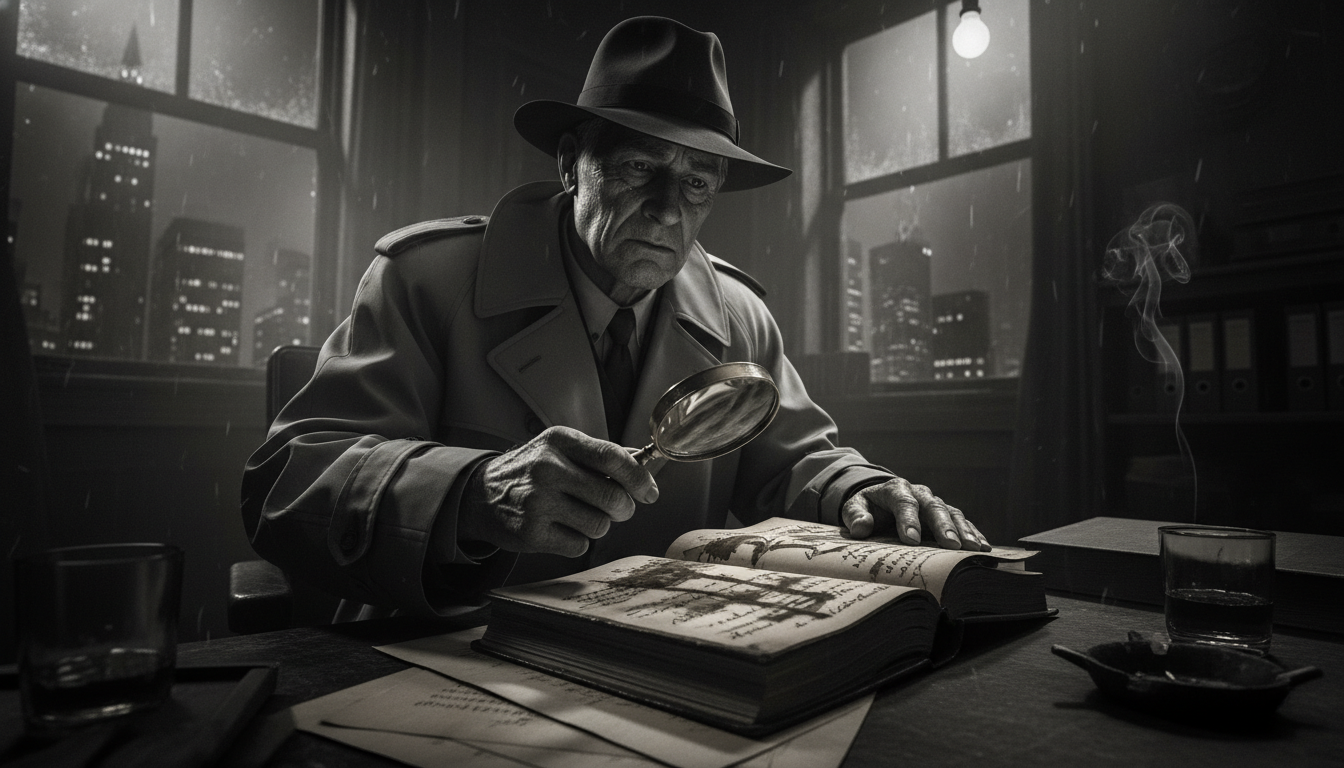
Victor sat at his mahogany desk and counted his pens. There were ten. There were always ten. He lined them up so their silver clips pointed toward the door. If one was missing, it meant the floor was starting to tilt. He could feel the tilt today. It was a slow, heavy slide toward the left side of the room.
His daughter, Blair, stood in the doorway. she didn’t knock. She never knocked anymore. She wore a sharp grey suit that made her look like a blade. She looked at the pens. She looked at the sticky notes plastered to the back of his computer monitor.
You missed the appointment, Blair said. Her voice was flat. It was the voice of a person who had already cried all her tears and had nothing left but dry wood.
Victor looked at his calendar. It was blank. He had scrubbed it clean with a white eraser until the paper pilled. I had work to do, he said.
You don’t have work, Dad. You retired three years ago. The firm took your name off the glass.
Victor felt a cold splash in his chest. It was the kind of cold you get when you step into a cellar and realize the light bulb is dead. He reached into his drawer and pulled out a thick, yellowed folder. The edges were chewed by time. The name on the tab said: LANA REED. 1994.
I took a case, Victor said. Pro-bono.
Blair walked over and leaned on the desk. Her knuckles were white. You can’t even find your car keys, Dad. I found them in the microwave this morning. You can’t take a case. You’re going to hurt someone. You’re going to hurt yourself.
Victor looked at the photo of Lana Reed clipped to the inside of the file. She was twenty-two in the picture. Her hair was a wild nest of curls and her eyes looked like they were expecting a punch. She had been in a cage for thirty years because Victor hadn’t been fast enough. He had been a high-stakes litigator. He had been a shark. But he had missed a single page of a fire marshal’s report, and Lana had paid for it in concrete and iron.
I am going to finish this, Victor said. His voice didn’t shake. He forced it to be a heavy stone. I am going to bring her home before I forget who she is.
Blair stared at him. A single tear tracked down her cheek, but she didn’t wipe it away. You already forgot my birthday, she whispered.
Victor looked at the pens. He didn’t have an answer. He waited for her to leave. When the door finally clicked shut, he let out a breath that tasted like old copper.
He opened the file. The words were blurry at first. They danced around like insects. He had to hunt them down one by one. Lana Reed was accused of setting fire to a trailer home in 1994. Her boyfriend had been inside. The prosecution said she did it for the insurance money. Five thousand dollars. That was the price of a life in a dirt-lot town.
Victor drove to the prison the next day. He used a GPS, but the voice on the phone sounded like it was mocking him. Turn right. Turn left. He felt like a rat in a maze. The world outside the car window looked wrong. The trees were too green. The signs were too bright. It felt like someone had turned the volume up on reality and he couldn’t find the knob to turn it down.
He met Lana in a small room that smelled like floor wax and sour breath. She was sixty now. Her hair was the color of a wet sidewalk. She sat down and looked at Victor. Her eyes were still expecting that punch.
You look old, Victor, she said.
Time is a thief, he replied. He tried to smile, but his face felt stiff, like a mask made of dried clay.
Why are you here? You lost my appeal in 2002. You stopped taking my calls in 2005.
Victor opened his briefcase. He moved slowly. He had to think about every motion. Reach. Grip. Pull. If he didn’t think about it, his hands might forget what they were doing. I found something, he lied.
He hadn’t found anything yet. He just knew there was a hole. A hole in the story. A hole in his memory.
Lana leaned forward. Her handcuffs clinked on the metal table. The sound was sharp. It poked at the base of Victor’s brain. You’re sick, she said. It wasn’t a question.
Victor felt his pulse thrumming in his neck. He felt exposed. He felt like a man standing naked in a blizzard. I am fine, he said.
Your tie is tucked into your shirt, Lana said. And you’re wearing two different shoes. One is black. One is brown.
Victor looked down. His stomach did a slow, nauseous roll. She was right. The black loafer and the brown wingtip stared back at him like a punchline to a joke he didn’t understand.
I’m here to talk about the kerosene, Victor said. He fought to keep his voice clinical. He had to be the observer. He couldn’t be the patient. The report said there was an accelerant. Kerosene. But you didn’t own a heater.
Lana shook her head. We had an electric one. It hummed. I hated that noise.
Victor scribbled the word HUM on a legal pad. He stared at the word until it stopped looking like a word. It turned into three sticks and a circle. He shook his head and the letters snapped back together.
Who was there that night, Lana? Besides the two of you?
Lana looked at the ceiling. Her throat moved as she swallowed. The neighbor. Marcus. He was the one who pulled me out. He said he saw the flames from his porch.
Victor remembered Marcus. A small man with fingernails bitten down to the quick. He had been the star witness. He had smelled the smoke. He had heard the scream.
I need to see the photos again, Victor said. The ones of the porch.
He left the prison with his head spinning. The sun was too much. It felt like a physical weight on his shoulders. He drove to the old neighborhood. It took him two hours because he kept forgetting which exit to take. He had to pull over twice to cry. It wasn’t a loud cry. It was just water leaking out of his eyes while he gripped the steering wheel so hard his knuckles turned yellow.
The trailer park was gone. It was a shopping center now. A giant grocery store sat where the fire had been. Victor stood in the parking lot and looked at the rows of carts. He tried to overlay the past onto the present.
The porch. Where was the porch?
He closed his eyes. He tried to reach back into the dark parts of his brain. He needed to find the file in his mind. He saw a flash of red. A flash of heat. He saw Marcus standing in the dirt. Marcus was holding something.
Victor opened his eyes. He went to his trunk and pulled out the box of crime scene photos. He flipped through them with trembling fingers. He found the one he wanted. It was a grainy shot of the rubble. In the corner of the frame, there was a man’s shadow.
The shadow was long. It stretched toward the fire. And in the hand of the shadow, there was a shape. A round shape with a handle.
A gas can? No. It was too small.
Victor felt a surge of something hot. Curiosity. It was the only thing that could cut through the fog. He drove to the county records office. He had to use a cane now. His legs felt like they belonged to someone else. They were heavy and clumsy.
He asked the clerk for the property deeds from 1994. The clerk was a young woman with a nose ring. She looked at him with pity. That look made Victor want to scream. He didn’t want pity. He wanted his mind back.
He spent four hours in a basement room. The air was thick with the smell of rotting paper. He found the map. He found the plot where the trailer had sat.
Marcus hadn’t lived next door.
Victor stared at the map. Marcus lived three blocks away. There was no way he could have seen the flames from his porch. There were two rows of houses and a thicket of pine trees in the way.
Then why was he there?
Victor felt the world tilt again. He grabbed the edge of the table. He felt like he was falling into the white spaces between his thoughts. He needed to call Blair. He needed to tell her he was right.
He pulled out his phone. He stared at the screen.
He didn’t know the passcode.
He tried his birthday. No. He tried Blair’s birthday. No. He tried the year he passed the bar. No.
The phone locked him out. Five minutes.
Victor sat in the dark basement and put his head in his hands. He felt the dementia like a physical predator. It was a beast that ate memories and spat out static. It was eating his daughter’s face. It was eating the way to his house. Soon, it would eat the name Lana Reed.
He took a pen and wrote MARCUS on his palm. Then he wrote 3 BLOCKS. Then he wrote NO PORCH.
He walked out of the building. He didn’t know where his car was. He walked for blocks. The city was a jumble of glass and noise. People pushed past him. He felt like a ghost. He was a man who had spent forty years winning arguments, and now he couldn’t even find a blue sedan.
He found a park bench and sat down. He looked at his hand.
MARCUS. 3 BLOCKS. NO PORCH.
The words were starting to smear from the sweat on his skin. He licked his thumb and tried to fix them, but he only made it worse. The blue ink stained his thumb. It looked like a bruise.
A man sat down on the other end of the bench. He was old, too. He was feeding pigeons with bits of a bagel.
You lost? the man asked.
Victor looked at him. The man had small eyes and thin lips. He looked familiar.
Do I know you? Victor asked.
The man smiled. It wasn’t a kind smile. It was a secret smile. You put me on the stand thirty years ago, Victor. You told me I was a hero.
Victor’s heart skipped a beat. It felt like a stone dropping into a well. Marcus.
Marcus threw a piece of bagel to a pigeon. The bird pecked at it aggressively. I heard you were losing your marbles. I didn’t believe it. The great Victor Vance. The shark.
Why did you lie? Victor asked. His voice was a whisper.
Marcus shrugged. The developer wanted that land. They couldn’t get the trailers out. People were stubborn. Especially Lana’s boyfriend. He wouldn’t budge. So the developer gave me a little something to speed things up. I didn’t mean for the guy to die. I just wanted a fire.
Victor felt a cold rage. It was the only thing that felt solid in his crumbling world. You killed him. You let her rot.
Marcus leaned in. His breath smelled like old coffee. And who are you going to tell, Victor? You don’t have a witness. You don’t have a recording. You don’t even know where your car is. By tomorrow, you’ll forget we even had this talk. You’re a broken clock. You’re a ghost.
Marcus stood up and brushed the crumbs off his lap. He walked away without looking back.
Victor watched him go. He felt the darkness closing in. The “Vital Need” was screaming inside him. He had to save her. He had to save the truth before it dissolved.
He looked at his hand. The ink was almost gone.
He reached into his pocket and found his car keys. They were there the whole time. He didn’t know how. He ran back toward the records office. He ignored the pain in his hips. He ignored the way the world was blurring at the edges.
He found his car. He didn’t drive home. He drove to the police station.
He walked up to the desk. He saw a young officer. The officer looked up. Can I help you, sir?
Victor opened his mouth.
Nothing came out.
The name. What was the name?
The man on the bench. The fire. The woman in the cage.
It was gone.
The beast had eaten it.
Victor stood there, his mouth hanging open. He felt the coldness in his chest expanding like a panicked pufferfish. He looked at his hand.
The ink was a blue smudge. It didn’t say anything. It was just a stain.
Sir? Are you okay?
Victor felt the stinging in his eyes. He felt the deep, soulful ache of a man who has reached for his legacy and found only smoke.
I… I don’t know, Victor said. His voice broke. It sounded like dry leaves scraping on a sidewalk. I think I’m lost.
The officer stood up. He came around the desk. He took Victor’s arm. Do you have someone I can call?
Victor reached into his pocket. He pulled out a crumpled piece of paper. It was a sticky note. It had been in his pocket for days.
It said: BLAIR.
And below it, a phone number.
And below that, in shaky handwriting: SHE IS MY DAUGHTER. DO NOT FORGET.
The officer called the number. Victor sat on a plastic chair. He watched the clock on the wall. The second hand ticked. Every tick felt like a part of his life falling off a cliff.
Forty minutes later, Blair burst through the doors. She wasn’t wearing the grey suit anymore. She was wearing a sweatshirt and jeans. Her hair was a mess. She looked at Victor and her face broke.
Dad, she said.
Victor looked at her. He didn’t recognize the sweatshirt. He didn’t recognize the way she held her keys. But he recognized the eyes. They were his eyes.
Blair, he said.
She hugged him. She smelled like rain. He held onto her like a drowning man.
I’m sorry, he whispered into her shoulder. I lost it. I lost the case. I lost the truth.
Blair pulled back. She looked at his hand. She saw the blue smudge. She saw the way his fingers were stained with ink.
She looked at the yellow folder he was still clutching against his chest.
It’s okay, she said. Her voice was trembling. We’ll find it again.
She led him out to her car. Victor sat in the passenger seat. He looked at the folder in his lap. Lana Reed.
He didn’t know who she was.
But as they drove away, he saw a man walking down the street. The man had a bagel in his hand.
Victor felt a spark. A tiny, sharp prick of curiosity. He felt like there was a secret hidden in the man’s shadow. He reached for his legal pad, but his hands wouldn’t move.
The car turned the corner. The man vanished. The spark went out.
Victor looked at his daughter. She was crying quietly as she drove. He wanted to tell her it was okay. He wanted to tell her that even if the lights were going out, the house was still there.
But he couldn’t find the words.
He just watched the trees go by. They were so green. They were the greenest things he had ever seen. He wondered if he had ever seen a tree before.
He closed his eyes. The dark was finally here. It wasn’t scary. It was just quiet. It was the quiet between the screams.
And in the silence, he felt a single, lingering thought.
Someone was waiting for him to remember.
He just couldn’t remember who.