
They tell you that time is a healer. They tell you the years wash the dirt away like a heavy summer rain. But they are lying to you. They are lying through their teeth. Time does not heal a wound: it just builds a wall around it. It turns the soft, red hurt into a hard, gray lump of scar. You carry it. You live with it. You learn to walk a little crooked because of the weight of it.
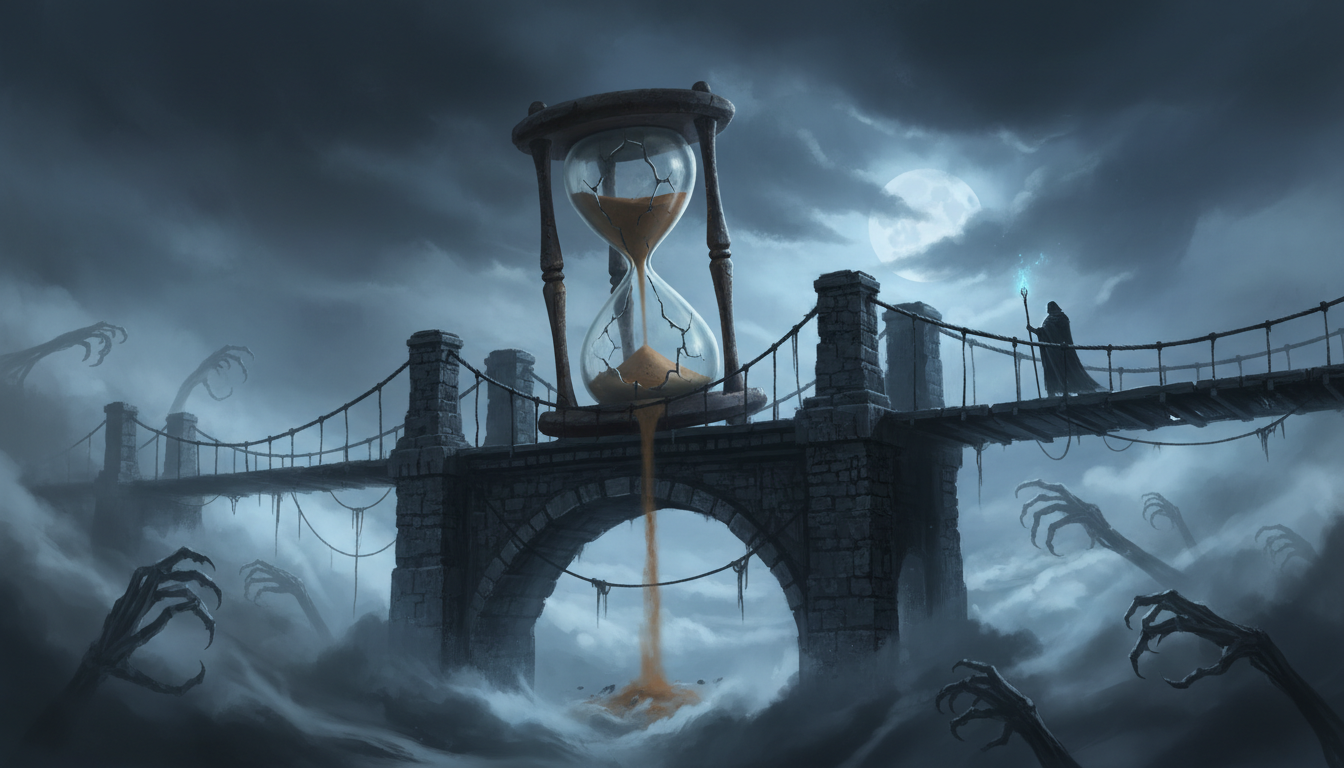
Tessa looked across the table and saw the man who had broken her life. It was Vince. It was Vince with his expensive leather shoes. It was Vince with that same crooked smile that looked like a hook hidden in a piece of bait. Ten years ago, he had taken her heart, her best design ideas, and a one-way ticket out of this town. He had left her standing in the rain with a pile of debt and a name that nobody wanted to hire. Now, he was back. He was back to build a bridge.
“The council wants something iconic,” Vince said. His voice was smooth. It sounded like expensive whiskey poured over jagged glass. “They want a landmark, Tessa. They want the future.”
Tessa felt a sudden coldness in her chest. It was a sharp, biting cold that made her breath hitch. She looked at the blueprints spread out between them. She saw the lines he had drawn. They were wild. They were messy. They looked like they were trying to fly away from the ground.
“The future is expensive, Vince,” Tessa said. She kept her voice flat. She kept it dry. “And the future doesn’t care about gravity. I am the one who has to make sure this thing stays up when the river rises. I am the one who has to account for the mud and the rot.”
Vince leaned forward. He smelled like cedar and coffee. It was a smell she used to find in her hair after they spent all night in the studio. “You always were afraid of the mud, Tessa. That is why you stay in this town. You want everything to be a perfect grid.”
“I like things that don’t fall down,” she snapped. “I like things that stay where I put them.”
They were trapped together. The town council had made it a rule: the local girl with the planning skills had to work with the big-city star with the vision. It was a year-long sentence. It was a year of sitting in a cramped office with the ghost of every lie he ever told her.
The office was small. It was an old trailer on the edge of the construction site. It smelled of dust and old paper. There were two chairs. Tessa had put her bag on the second chair every morning for a week to keep him away, but today, he just moved it. He sat down so close that his knee brushed hers.
She flinched. It was a small movement, but it felt like an earthquake in her bones.
“Stop it,” she whispered.
“Stop what?” Vince asked. He wasn’t looking at the plans. He was looking at her hands. Her hands were shaking. She gripped her pencil so hard the wood groaned.
“Stop acting like you didn’t kill me,” she said.
The silence in the trailer was heavy. It was the kind of silence that has a sound: a low, humming throb like a power line in the wind. Vince didn’t look away. He didn’t make a joke. The sharp, cynical mask he wore every day slipped for just a second. He looked tired. He looked like a man who had been running for a long time and finally realized he was in a circle.
“I didn’t think you would stay,” he said. His voice broke. It was a tiny crack, a splinter in the wood. “I thought you would follow me. I thought you would see the award and want to be part of the win.”
“The win you took from me?” Tessa laughed. It was a short, ugly sound. “You put your name on my work, Vince. You took the credit. You took the money. You took the chance I had to be more than a girl who draws maps for a dying town.”
“I was a kid,” he said. “I was a scared kid who thought he had to be a king or he would be a nobody.”
“You were a thief,” she corrected.
They worked through the winter. The ground turned to iron. The river turned to gray slush. They fought over every bolt. They fought over the color of the steel. They fought over the way the light would hit the water at noon. But in the middle of the fighting, things started to change.
It happened in the small things. It was the way Vince would bring her a sandwich because he knew she forgot to eat. It was the way he stopped using “I” and started using “We.” It was the way he stayed late to help her check the math on the load-bearing beams, even though he hated the math.
One night, the heater in the trailer died. The cold was brutal. It was the kind of cold that crawls into your joints and stays there. Tessa was shivering. Her teeth were chattering so hard she couldn’t think.
Vince didn’t say anything. He didn’t ask. He just took off his heavy wool coat and wrapped it around her shoulders.
“I don’t want your coat,” she said, but she didn’t pull away. The coat was warm. It felt like a weight she needed.
“Just wear it, Tessa,” he said. He was standing by the window, looking out at the half-built skeleton of the bridge. “The bridge is good. You know it’s good.”
“It’s okay,” she lied.
“It’s the best thing I’ve ever touched,” he said. “Because you fixed the parts of me that don’t work. You put the ground under my feet.”
He turned around. The blue light from the site lamps hit his face. He looked old. He looked like he had finally understood that a bridge isn’t just about the span. It is about the connection. It is about the two sides that have to hold each other up or the whole thing falls into the dark.
“I can’t fix what I did,” Vince said. “I know that. I wake up every morning and I know that. But I’m here now. I’m staying until the last bolt is turned. And I’m staying after that, if you’ll have me.”
Tessa felt the sting in her eyes. It was a hot, sharp pain. She looked at the man who had been her enemy for ten years. She looked at the man who had been her heart for four years before that. The wall around her wound was still there, but it felt thinner. It felt like it might be made of glass instead of stone.
“The bridge might still fail,” she said. Her voice was a whisper. “The river is strong. The mud is deep.”
Vince walked over to her. He didn’t touch her face. He just put his hand on the table, right next to hers. “Then we’ll build it again,” he said. “We’ll just keep building it until it stays.”
Tessa looked down at their hands. They weren’t touching, but the space between them was humming. It was a small gap. It was a gap they could cross. She moved her pinky finger just an inch. It touched the edge of his hand.
It wasn’t a movie ending. There were no fireworks. There was just the sound of the wind rattling the thin walls of the trailer and the steady, heavy beat of two hearts trying to remember how to rhyme. The bridge was still half-finished. The past was still a heavy load. But for the first time in a decade, the weight didn’t feel like it was going to crush her. It felt like something she could carry. It felt like a foundation.