

My office smells like wet dogs and old coffee. It is a place where hope goes to get a parking ticket. I have spent thirty years here as a public defender. I defend people who have nothing left but a bad attitude and a court date. Most days, I feel like a man trying to bail out the ocean with a leaking spoon.
The fluorescent lights overhead hum a low, buzzing song about failure. They flicker every few seconds. It makes the dust motes dancing in the air look like tiny ghosts. I was staring at those ghosts when Maya walked in. She was the most hated woman in the city. The news called her “The Careless Mother.” I just saw a woman who looked like she had been folded like a card table and left in the rain.
“I didn’t mean for it to happen,” she whispered. Her voice was thin. It sounded like dry leaves scraping on a sidewalk.
I looked at her file. A freak accident. A gate left unlatched. A toddler who wandered toward the pool while Maya was inside answering the door for a delivery. It was the kind of mistake that takes five seconds to make and a lifetime to pay for.
The coldness in my chest was sudden and sharp. It felt like I had swallowed a handful of ice cubes. I knew that coldness. I had been carrying a block of ice in my heart for thirty years.
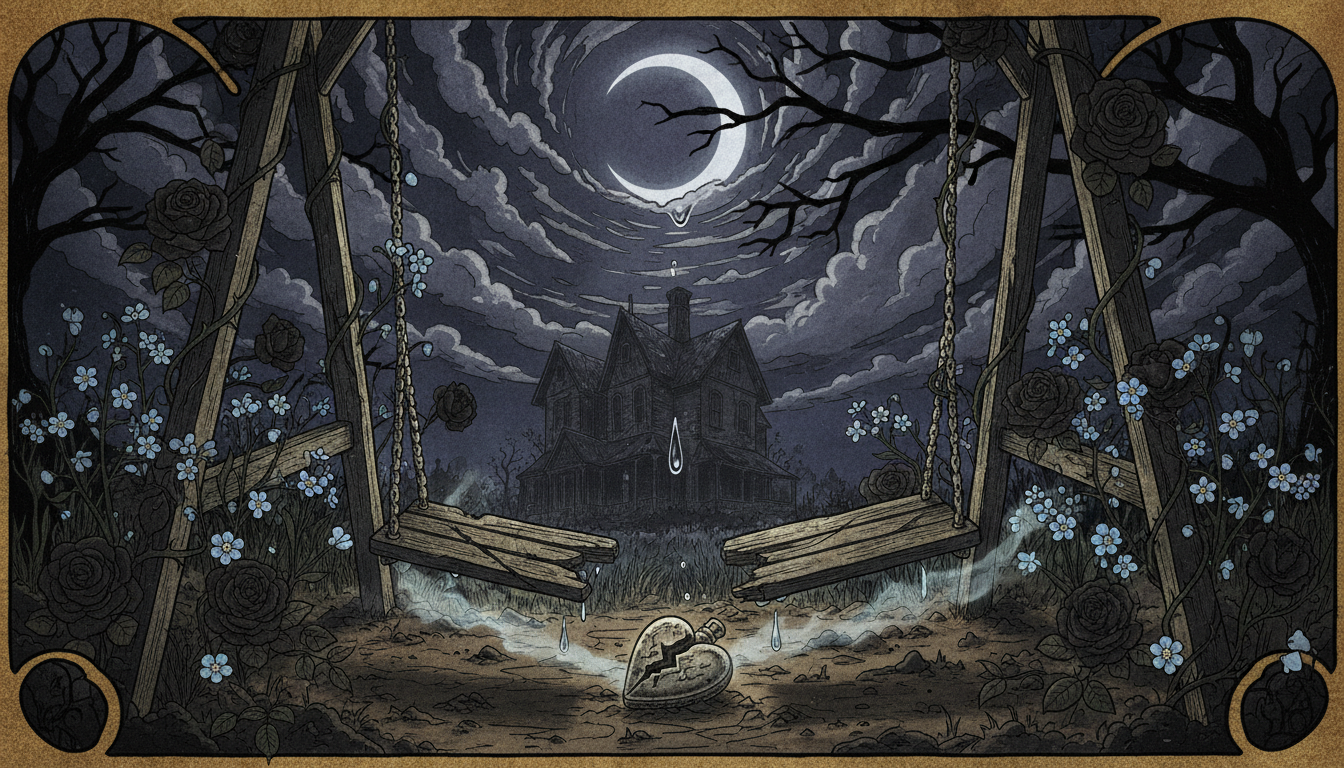
Back then, her name was Frankie. She was five years old with pigtails that never stayed even. I was on the phone with a client. I was busy. I was important. I didn’t see her climb the fence. I didn’t hear the splash. By the time I looked up, the world had turned into a different, darker place.
“Sit down, Maya,” I said. My own voice broke. It sounded like a rusty hinge.
The public wanted her in jail. They wanted her to suffer because it made them feel safe. If Maya was a monster, then their own children were safe. But if Maya was just a tired woman who made a mistake, then it could happen to anyone. That is a truth people cannot stomach. They would rather hang her than look in the mirror.
We went to court two weeks later. The courtroom felt like a tomb made of polished wood. Judge Marcus sat up high. He looked like he was carved out of old leather and spite. He stared down at Maya with eyes that held no light.
The prosecutor was a young man named Reid. He wore a suit that cost more than my car. He spoke about “responsibility” and “duty” as if he were a god. He showed pictures of the backyard. He pointed at the gate. He made Maya look like a predator instead of a grieving mother.
I sat there and watched the back of Maya’s neck. She was shaking. It was a tiny, rhythmic tremble. It reminded me of a panicked pufferfish. I wanted to reach out and touch her shoulder, but I couldn’t move. My lungs felt like they were filled with wet sand.
“Mr. Vance?” the judge barked. “Are you going to cross-examine the witness, or are you just admiring the carpet?”
I stood up. My knees popped. I felt every year of my age. I felt the weight of every person I couldn’t save. I looked at the jury. Twelve people who had already decided she was guilty.
“I am not here to tell you Maya is perfect,” I started. I didn’t use my lawyer voice. I used my human voice. It was quiet and shaky. “I am here because we all live on a thin wire. We think we are walking on solid ground, but we aren’t. We are all one phone call, one turned head, or one unlatched gate away from being her.”
I saw a woman in the front row of the jury flinch. She clutched her purse.
“She is not a monster,” I said. “She is a person who is already in a prison. You can’t give her a sentence worse than the one she gives herself every morning when she wakes up and realizes the house is quiet.”
As I spoke, the room seemed to blur. The wood of the tables turned into the grass of my old backyard. I wasn’t in a courtroom anymore. I was standing by a pool that was too blue and too still. I saw Frankie’s yellow shoe floating near the edge. The grief came up my throat like salt water. It was a physical ache, a stinging in my eyes that I couldn’t stop.
I sat down. The silence in the room was heavy. It was the kind of silence that happens right before a storm breaks.
Maya looked at me then. She didn’t say thank you. She didn’t have to. She saw the tears in my eyes and she knew. She saw the yellow shoe in my head. We were members of the same terrible club. We were the ones who stayed behind.
The jury went away to talk. I went to the cafeteria and bought a lukewarm burrito. It tasted like cardboard and regret. I sat at a small table and watched a fly struggle against a windowpane. It kept hitting the glass, over and over. It didn’t understand why it couldn’t reach the sun.
“You okay, Elias?”
It was Dave, the bailiff. He was a good guy who smelled like peppermint and floor wax.
“I’m fine, Dave,” I lied. “Just getting too old for the theater.”
“You did good in there. Real emotional. You almost had me crying,” Dave said. He laughed, a short, barking sound.
“It wasn’t a show,” I said.
The jury came back after four hours. That is a bad sign. Usually, a quick verdict means “not guilty.” A long wait means they are arguing about how many years to give her.
Maya stood up. Her hands were clenched so tight her knuckles were white. The foreman stood up. He was a big man with a beard and a flannel shirt.
“We find the defendant not guilty on the charge of felony negligence,” he said.
The room gasped. A few people hissed. Maya didn’t cheer. She didn’t even smile. She just collapsed back into her chair. She looked like all the air had been let out of her.
I should have felt a victory. I should have felt like a hero. But as I packed my briefcase, I just felt empty. I had saved her from jail, but I couldn’t save her from the quiet house. I couldn’t save her from the empty swings in the park.
I walked out of the courthouse. The sun was bright, too bright. It hurt my eyes. People were shouting at Maya as she was led to a car. They called her names. They threw a crumpled soda can.
I walked the other way. I went to my car and sat in the heat for a long time. I didn’t turn on the engine. I just sat there and looked at my hands. They were old. They were covered in liver spots and wrinkles. They were the same hands that had pulled a small, cold body out of the water thirty years ago.
I thought about retirement. I thought about moving to a place where nobody knew my name or my stories. But I knew I wouldn’t. I would be back in that smelly office tomorrow. I would be looking at the dust ghosts again.
I finally started the car. I drove past a park on my way home. There was a swing set near the road. One of the swings was moving, caught in the wind. It went back and forth, back and forth. It was empty.
I had to pull over because I couldn’t see through the tears. I sat on the shoulder of the road and let the “body” reaction take me. My chest felt like it was being squeezed by a giant fist. My throat was so tight I could barely breathe.
People think justice is a scale. They think it’s about balance. But it’s not. Justice is just a way to keep us from tearing each other apart while we wait for the end.
I stayed there until the sun went down. The park turned dark. The empty swing stopped moving. I wiped my face with a dirty napkin from the glove box and drove home to my quiet house. I didn’t turn on the lights. I just sat in the dark and listened to the silence. It was the loudest thing I had ever heard.