

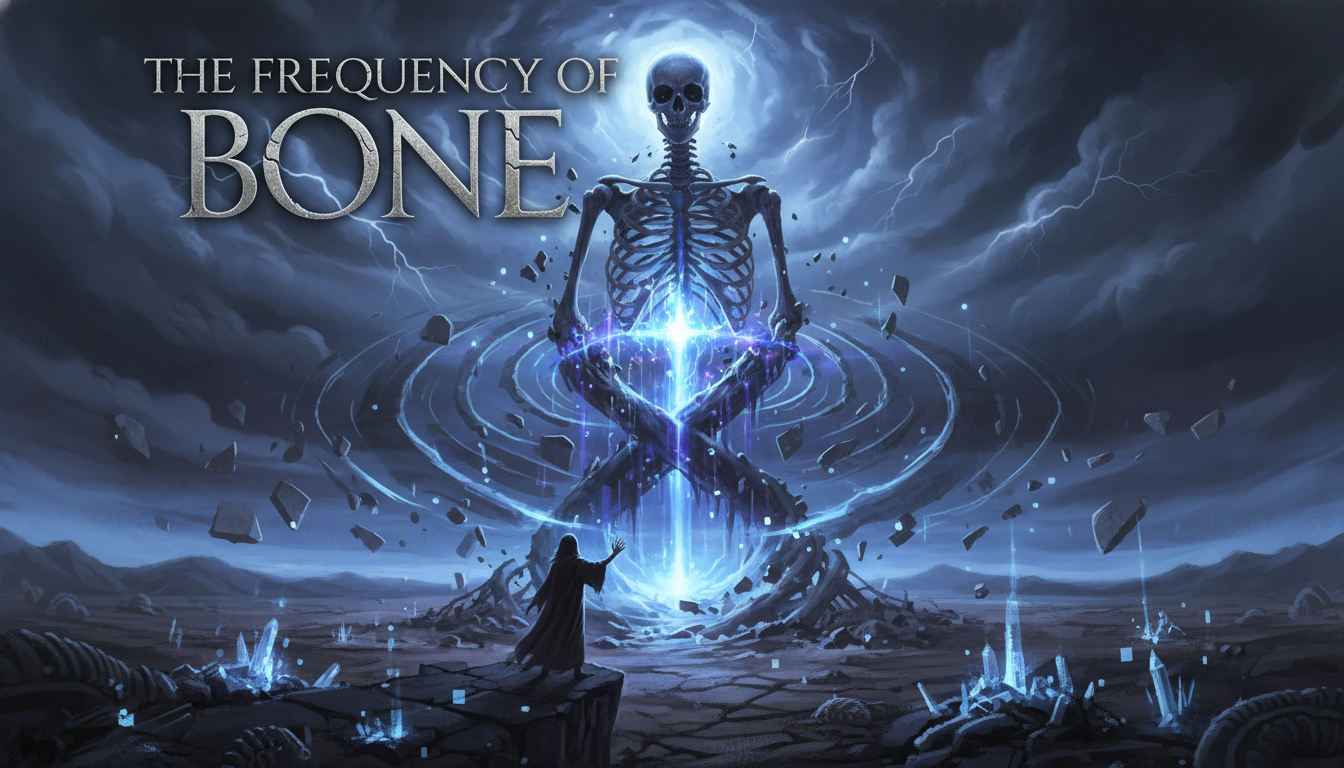
The tea kettle on the stove did not whistle. To Elena, it simply shuddered. She sat at the small, laminate kitchen table, her palm pressed flat against the wood, waiting for the precise moment the vibration transitioned from a low, rhythmic thrum to a frantic, rattling hum. That was the signal. Steam was rising, though she couldn’t hear the hiss of it.
She poured the water over a teabag, watching the clear liquid turn a bruised, dark amber. Her apartment was a tomb of high-end mahogany and velvet, preserved from a life that had ended three years ago. In the corner of the living room sat the Steinway, draped in a heavy canvas drop cloth. It looked like a crouched beast, or perhaps a monument to a woman who no longer existed.
Elena caught her reflection in the darkened window. At thirty-four, she carried the rigid posture of a woman who had spent twenty years under the tyrannical rule of a metronome. Her face was a landscape of controlled stillness. People often mistook her lack of reaction for serenity, not realizing she was simply waiting for the world to provide a visual cue for how she should feel.
She checked her watch. 8:15 AM. Time for the commute that felt like a descent into a different circle of hell.
The community center was located in a converted warehouse where the smell of bleach battled unsuccessfully against the scent of damp concrete. The “classroom” was a cavernous room with high windows that let in a gray, uncharitable light.
Elena didn’t look at the students as they filed in. She felt them. The heavy tread of oversized sneakers, the slamming of a backpack against a metal chair—these things registered as sharp jolts in the soles of her feet.
She stood at the front of the room, her back to the chalkboard. On the board, she had drawn a series of sine waves and color spectrums.
“Music is not a sound,” she said, her voice sounding thin and alien in her own skull. She didn’t know if she was shouting or whispering; she relied on the tension in her throat to gauge the volume. “Music is a displacement of air. It is a physical intrusion.”
Most of the kids stared at her with the blank, glazed-over eyes of those who had already been told they were unteachable. But in the back row, a boy named Malik was leaning back, his chair balanced on two legs. He was tapping a rhythm on his thighs. It was fast—frenetic, jagged, and syncopated.
Elena walked toward him. The room went still. She could feel the sudden vacuum of movement. She reached out and grabbed the back of Malik’s chair, slamming the front legs down onto the floor.
The vibration traveled up her arm like an electric shock.
Malik looked up, his eyes hard, his jaw set. He was seventeen, with shoulders that seemed perpetually hunched as if expecting a blow.
“You’re rushing,” Elena said, her eyes locked on his.
He didn’t speak. He just looked at her, his lip curling slightly. He reached out, grabbed a drumstick from his bag, and struck the metal leg of the desk.
The vibration was sharp, silver, and dissonant. Elena felt it in her molars.
“You think because I can’t hear you, you can hide,” she said. She reached into her bag and pulled out a large, heavy balloon. She blew it up until it was taut, the rubber groaning, and handed it to him. “Hold this. Against your chest.”
Malik scoffed, looking at his friends, but Elena didn’t flinch. She waited, a statue of cold, uncompromising expectation. Finally, he took the balloon, cradling it like a fragile heart.
Elena walked to the upright piano in the corner—a battered, out-of-tune instrument that had been donated by a church. She sat down. She didn’t look at the keys. She didn’t need to. She closed her eyes and reached for a memory.
She played a low C, holding the pedal down.
Malik flinched. The balloon acted as an amplifier, catching the sound waves and pressing them directly into his ribcage.
She played a dissonant cluster in the bass, then a sudden, soaring arpeggio in the right hand. She wasn’t playing for beauty; she was playing for impact. She wanted him to feel the violence of the vibration, the way a minor second feels like a needle under the skin, the way a perfect fifth feels like a solid floor.
When she finished, the room was so quiet she could feel the stillness pressing against her eardrums like deep water.
Malik was looking down at the balloon. His hands were shaking.
“What did that feel like?” she asked.
He looked up, and for the first time, the mask of the “at-risk youth” slipped. He looked terrified. “It felt like… like someone was digging a hole inside me,” he whispered. Elena read his lips, the shape of the ‘h’ in *hole* a soft puff of air.
“That’s the G-minor,” Elena said. “It’s not a note. It’s a wound.”
***
The weeks bled into a blur of gray light and bone-deep fatigue. Elena found herself staying late, long after the other instructors had fled to their quiet suburbs. Malik stayed, too.
He was a prodigy of the most dangerous kind—the kind that didn’t know the rules well enough to be afraid of breaking them. He played the piano with a terrifying, percussive energy, treating the keys like a drum kit.
One evening, the rain was lashing against the high windows, creating a rhythmic drumming that Elena could feel in the floorboards. Malik was at the piano, his fingers flying in a chaotic, brilliant mess.
Elena stood behind him, her hand hovering over the wood of the piano. She was watching his reflection in the fallboard. He was crying. Not the loud, gasping sobs of a child, but the silent, steady leakage of someone who has run out of ways to contain their own history.
She realized then that they were the same. She had lost her world to a sudden, neurological silence—a “disgraceful” collapse on stage at the Carnegie Hall where she had simply stopped, her ears ringing with a high, white scream that never went away. He was losing his world to a city that viewed him as a statistic.
She stepped forward and placed her hands over his on the keys.
His skin was hot. He stopped playing, his chest heaving.
“I can’t do it,” he said, his lips trembling. “I can’t make it sound like yours. It just sounds like noise.”
“It’s supposed to sound like noise, Malik,” she said. She moved his hands to the middle of the keyboard. “The world is noise. You are trying to find the frequency that makes the noise stop hurting.”
She sat beside him on the narrow bench. The “redundant second chair” of her life was suddenly occupied.
“Close your eyes,” she commanded.
He did.
“Put your hand on the soundboard. Not the keys. The wood.”
He leaned over, pressing his palm to the dark, scarred mahogany of the upright. Elena began to play. She played a simple, haunting melody she had written in the weeks following her diagnosis—a piece she had never performed, because it was a piece about the end of the world.
She watched him. As the low notes resonated, his shoulders dropped. As the melody climbed, his head tilted back. He wasn’t hearing the music; he was absorbing it through his skin.
“It’s blue,” he whispered, his eyes still closed. “It feels like… like being under a bridge when a train goes over. But soft.”
Elena felt a sharp, sudden ache in her chest. It was a sensation she hadn’t felt in years—not the dull throb of grief, but the sharp, piercing needle of connection.
“That’s the bridge,” she said. “The bridge between what you feel and what you can say.”
***
The “Spring Showcase” was a pathetic affair on paper. A folding stage in the community center gym, a few rows of plastic chairs, and a hum from a faulty HVAC system that Elena could feel in her heels.
Malik was supposed to play a piece of Bach—something structured, something that would prove he had “learned.” But as he sat at the piano, looking out at the small crowd of exhausted parents and bored social workers, he froze.
Elena stood in the wings. She saw the way his fingers hovered over the keys, paralyzed by the weight of the silence. He looked toward her, his eyes wide with a sudden, devastating panic.
The “brain” told her to go out there, to whisper instructions, to tell him to start the Minuet in G.
But her “body” remembered the Carnegie stage. She remembered the moment the sound had died, and the way the audience had looked at her—not with sympathy, but with the voyeuristic hunger of people watching a car crash.
She stepped out from the shadows. She didn’t go to him. She walked to the center of the stage, took a heavy wooden chair, and slammed it down onto the floorboards with all her might.
The *thud* vibrated through the entire room. Everyone jumped.
Malik looked at her.
She did it again. *Thud.*
She was giving him the beat. The frequency.
Malik’s face changed. The fear vanished, replaced by a raw, jagged resolve. He didn’t play Bach.
He struck the low strings of the piano with his left hand, a booming, percussive roar that made the plastic chairs rattle. Then, his right hand began to weave a melody that was fast, discordant, and achingly beautiful. It was the sound of the subway, the sound of the tea kettle, the sound of a heart breaking in a silent room.
He played with his whole body, his feet stomping the pedals, his torso swaying. Elena stood there, her hand on the side of the stage, feeling the music pour through the wood, into her palm, and up into her heart.
She couldn’t hear a single note.
But for the first time in three years, she wasn’t deaf. She was a conductor of lightning.
When Malik finished, he didn’t wait for the applause. He didn’t even look at the audience. He looked at Elena.
In the silence that followed—a silence that Elena finally understood was not an absence, but a presence—he mouthed two words.
*I’m here.*
Elena felt a hot, stinging moisture in her eyes. She reached out, her fingers brushing the rough wood of the stage. The vibration of the final chord was still there, a ghost in the floorboards, slowly fading into the stillness.
She walked off the stage, her posture no longer rigid. She didn’t need the metronome anymore. She had the pulse.
Outside, the city was a chaotic symphony of lights and movement. Elena stood on the sidewalk, the cold air biting at her cheeks. A bus roared past, and she felt the massive, heavy displacement of air against her skin. She closed her eyes and leaned into it.
The world was loud. It was terrifying. It was beautiful.
And she could feel every bit of it.